Open Coping Joints
You See
Water stains high on an inside wall after wind-driven rain.
What It Means
Joints between cap stones or metal coping opened, so rain soaks the wall and runs behind the flashing.
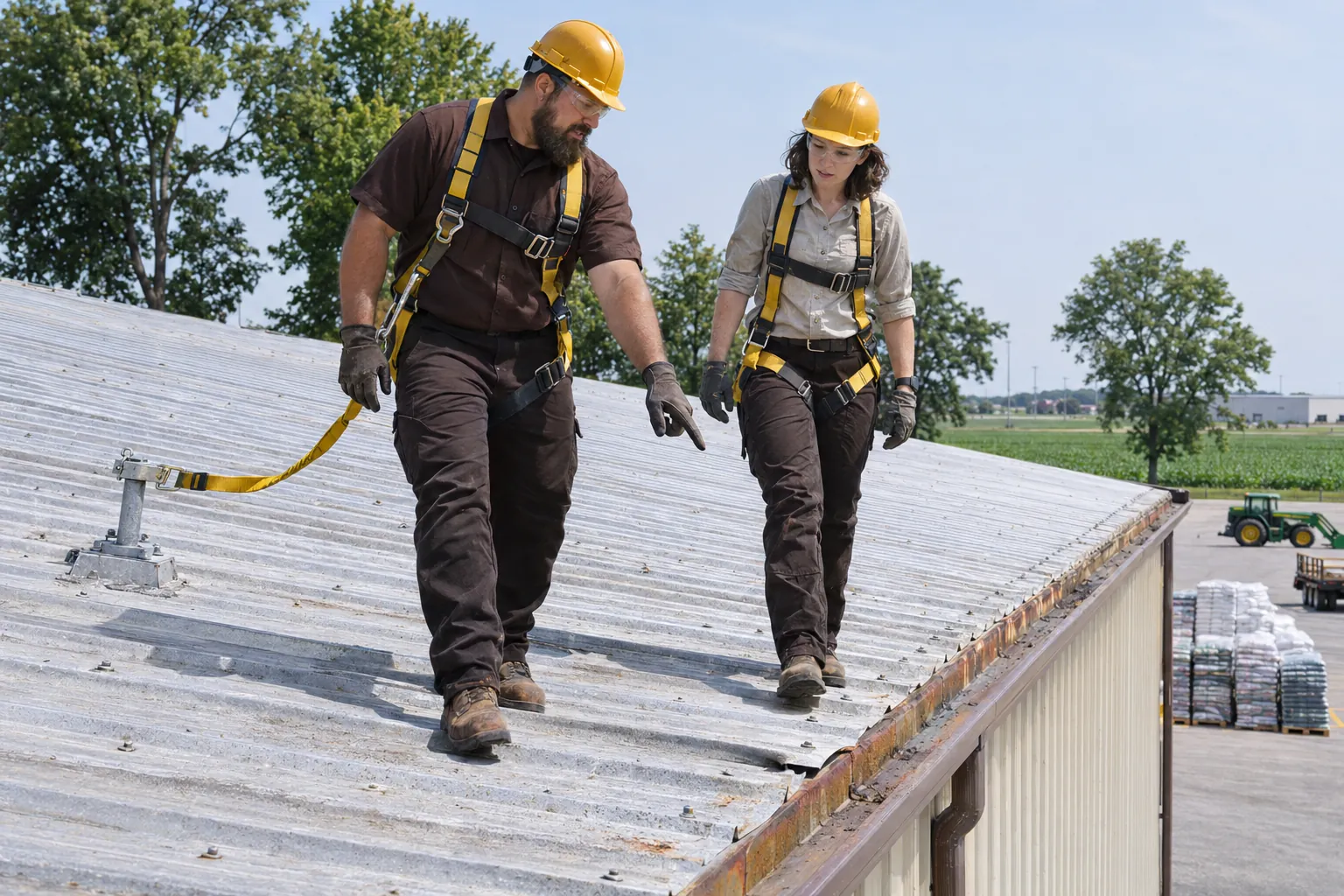
As a Franklin commercial roof repair contractor, we repair storefront roofs behind parapet walls downtown and TPO and steel roofs on plants at the edge of town.
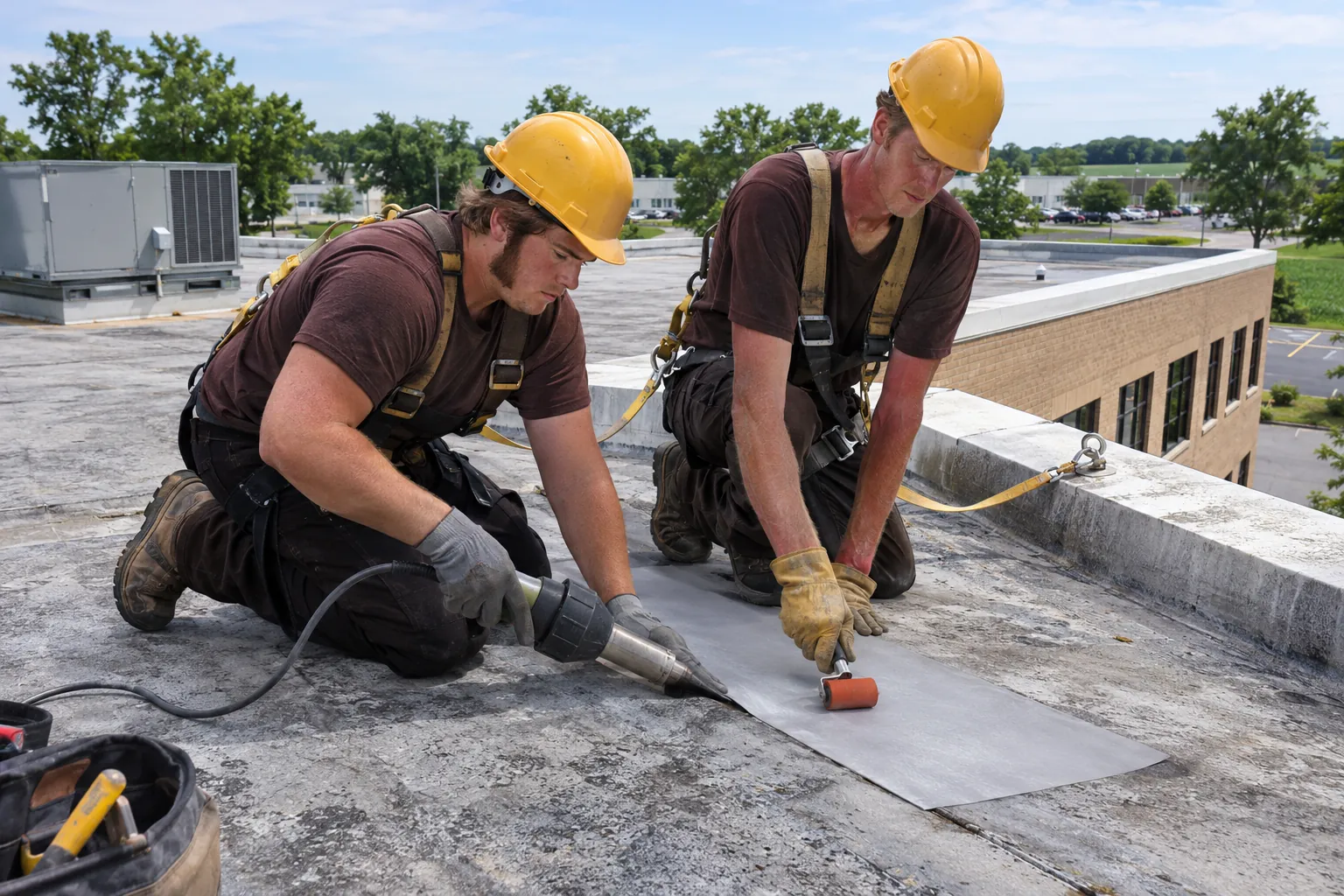
Franklin commercial roof repair downtown means working on storefront roofs boxed in by brick parapets.
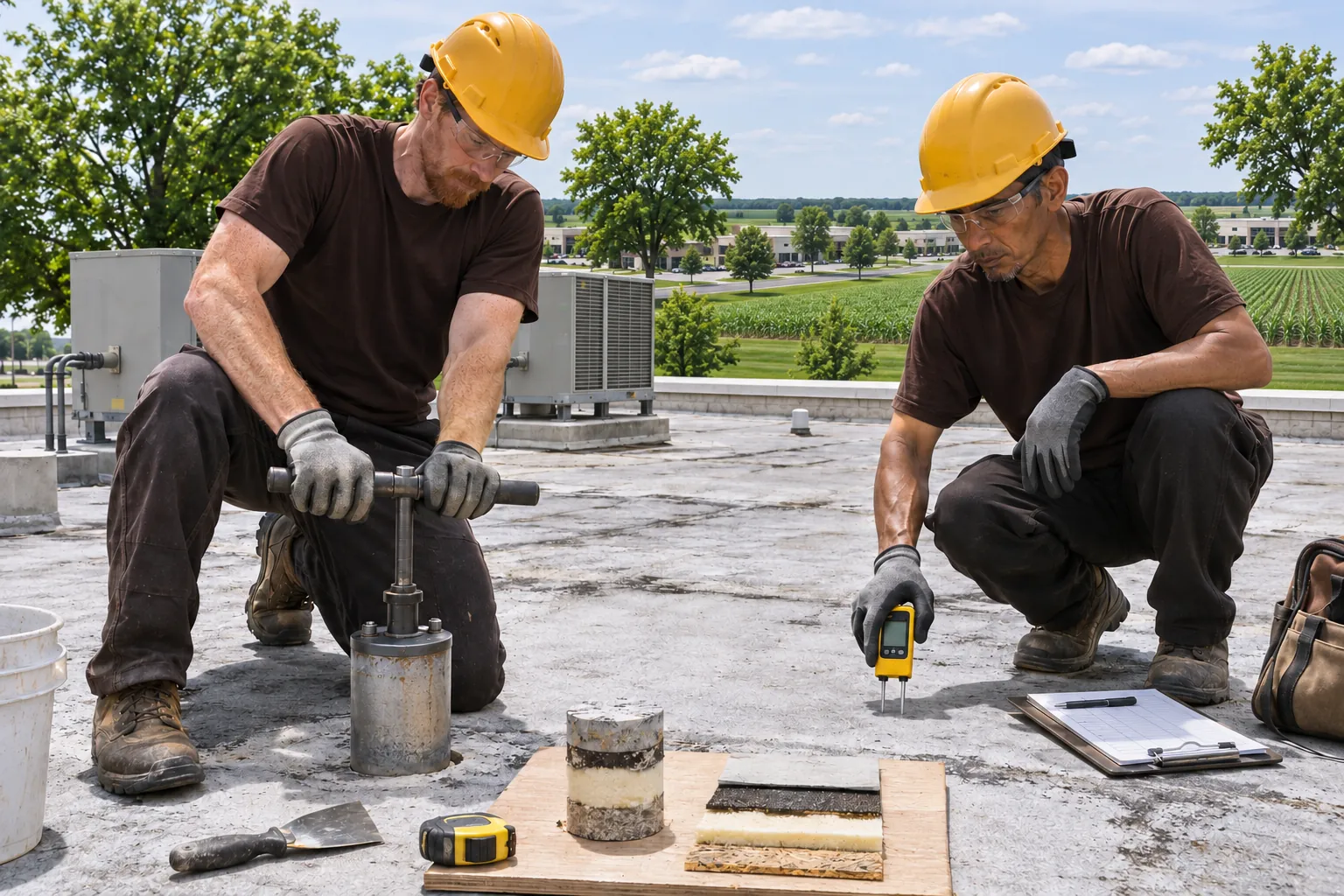
Older storefronts here carry built-up or modified roofs that drain toward the back wall. Leaks tend to start where the roof meets the parapet: open coping joints, cracked masonry above the flashing, and base flashing that has slid down the wall.
Access is tight. Materials go up from the alley by ladder hoist, shops below stay open, and work stays clear of sidewalks out front. Plants on the edge of town get the same walk, with curbs and seams checked first.
Storefront and plant roofs fail in different spots. These are the ones we find most.
Water stains high on an inside wall after wind-driven rain.
Joints between cap stones or metal coping opened, so rain soaks the wall and runs behind the flashing.
A gap where the roof sheet meets the brick wall.
Old mastic let go and gravity pulled the flashing down, leaving the wall face exposed to standing water.
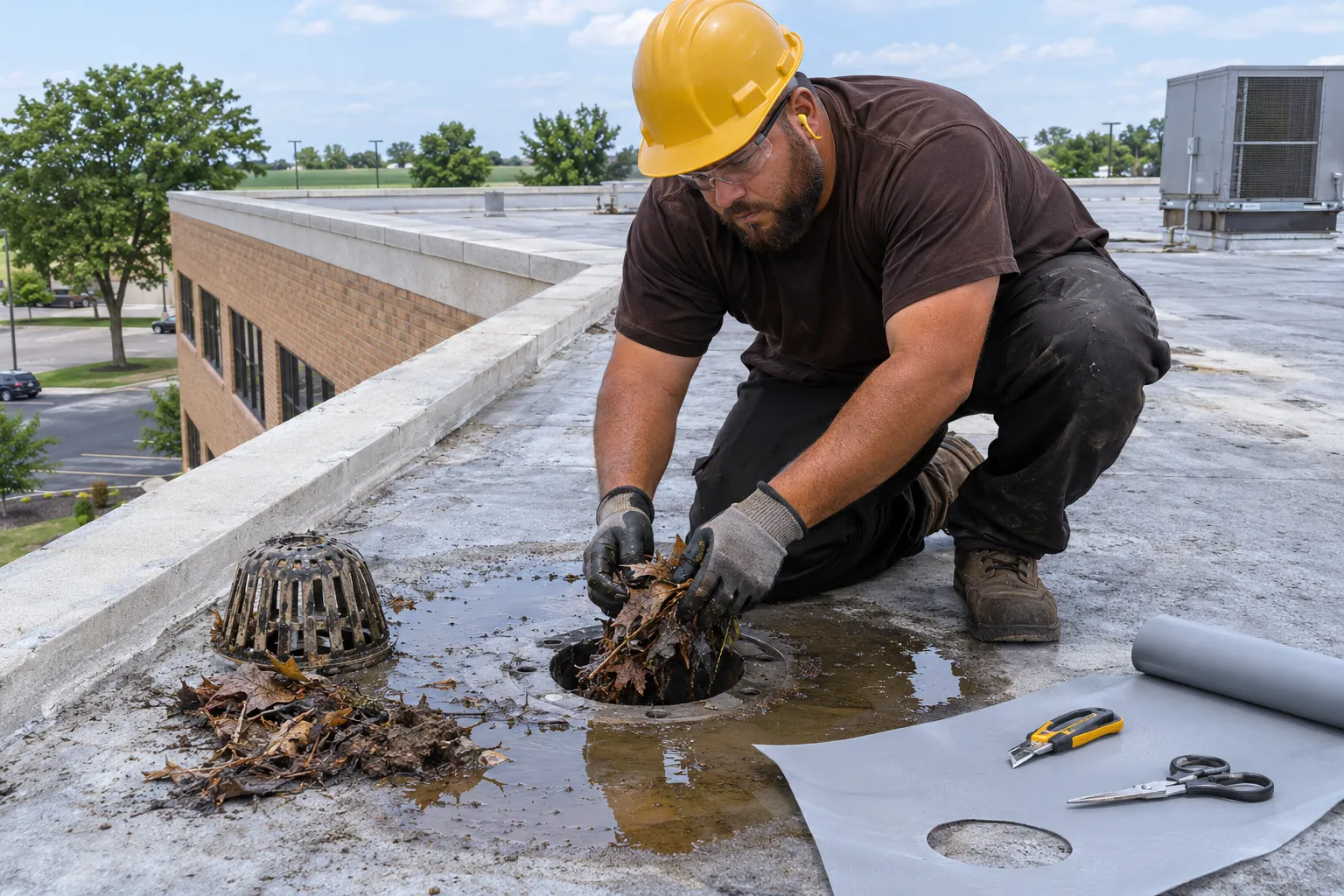
Ponding against the rear parapet for days after rain.
A clogged scupper or downspout holds water against the lowest wall, where it finds every seam.
Drips near units on manufacturing buildings outside downtown.
Curb corners tear on TPO roofs where technicians kneel, letting water run inside the curb.
A crack running along the line where two storefront roofs meet.
Neighboring roofs move differently in cold weather, and the joint between them splits.
A drip below a ceiling hatch at the back of a shop.
Original hatch curbs sit low on older storefronts, so ponding at the back wall reaches their flashing.
The same storefront roof before and after a visit.
Four repairs cover most storefront and plant calls here.
Open joints in metal coping or stone caps are cleaned and resealed so rain stops soaking the wall from the top.
Slipped flashing is stripped off, the wall face is cleaned, and new flashing goes up under a fastened termination bar.
Price follows wall length, how much flashing is loose, access from the alley, and how much board is wet.
Blocked scuppers are cleared, reflashed, and sized so water leaves the back wall quickly.
That usually starts at the parapet cap, well above the roof itself. Book an estimate and we will check the wall from cap to base.
Five steps on a storefront roof.
Shop hours, alley deliveries, and neighbor access are set before we arrive, so the storefront stays open.
Coping, masonry, counterflashing, and base flashing are checked along every parapet, then the field and drains.
Findings are priced item by item, with the wall repairs separated from the field repairs.
Materials go up the back, repairs are made in matching plies, and the roof is closed each evening.
Photos of each wall and patch go to the owner, which helps when storefronts share a wall.
Besides Franklin, we repair roofs in Greenwood and three more towns nearby. Elsewhere? Call us or send us a message.
Warehouse and industrial roofs, with problem areas traced first.
Shelbyville commercial roof repair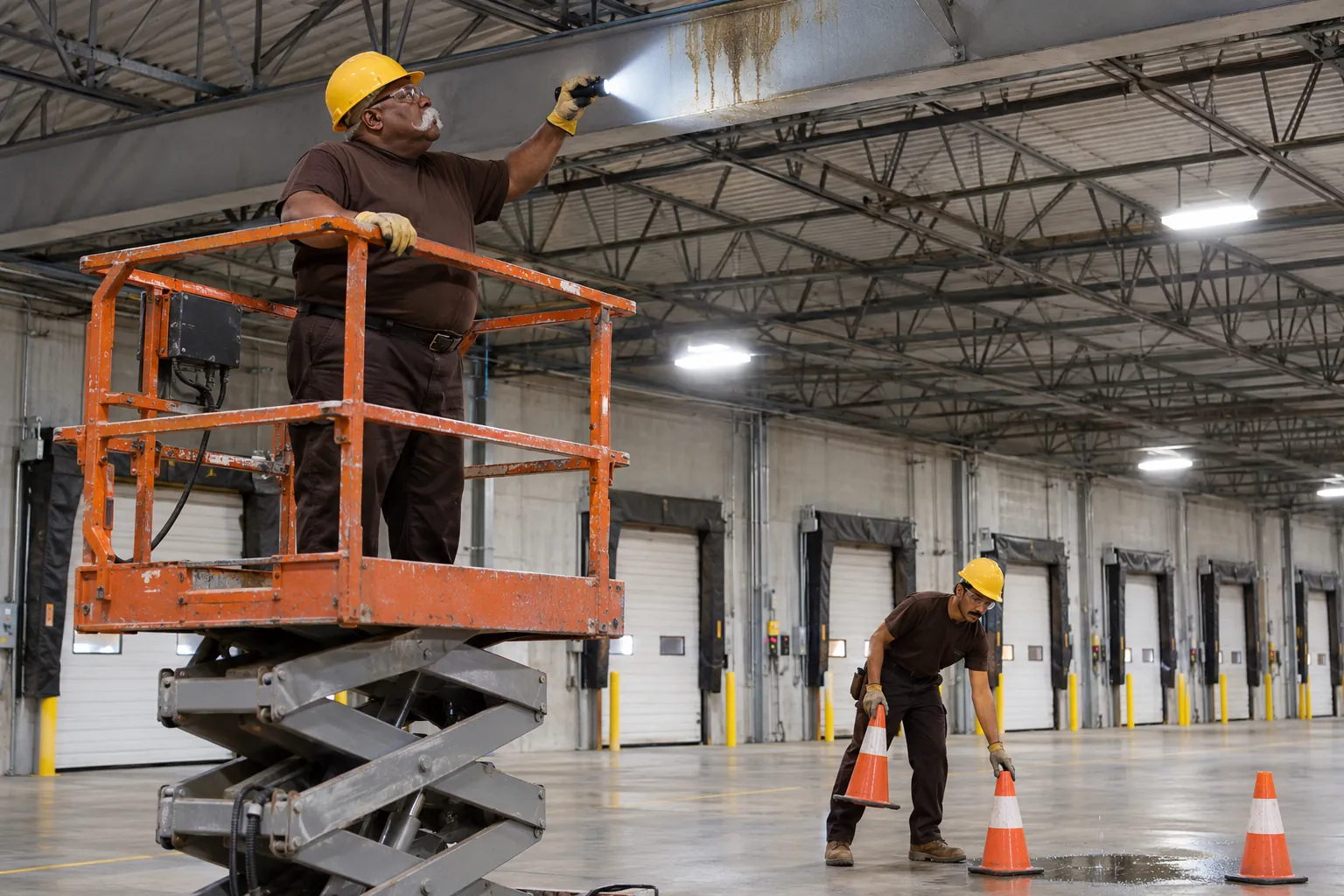
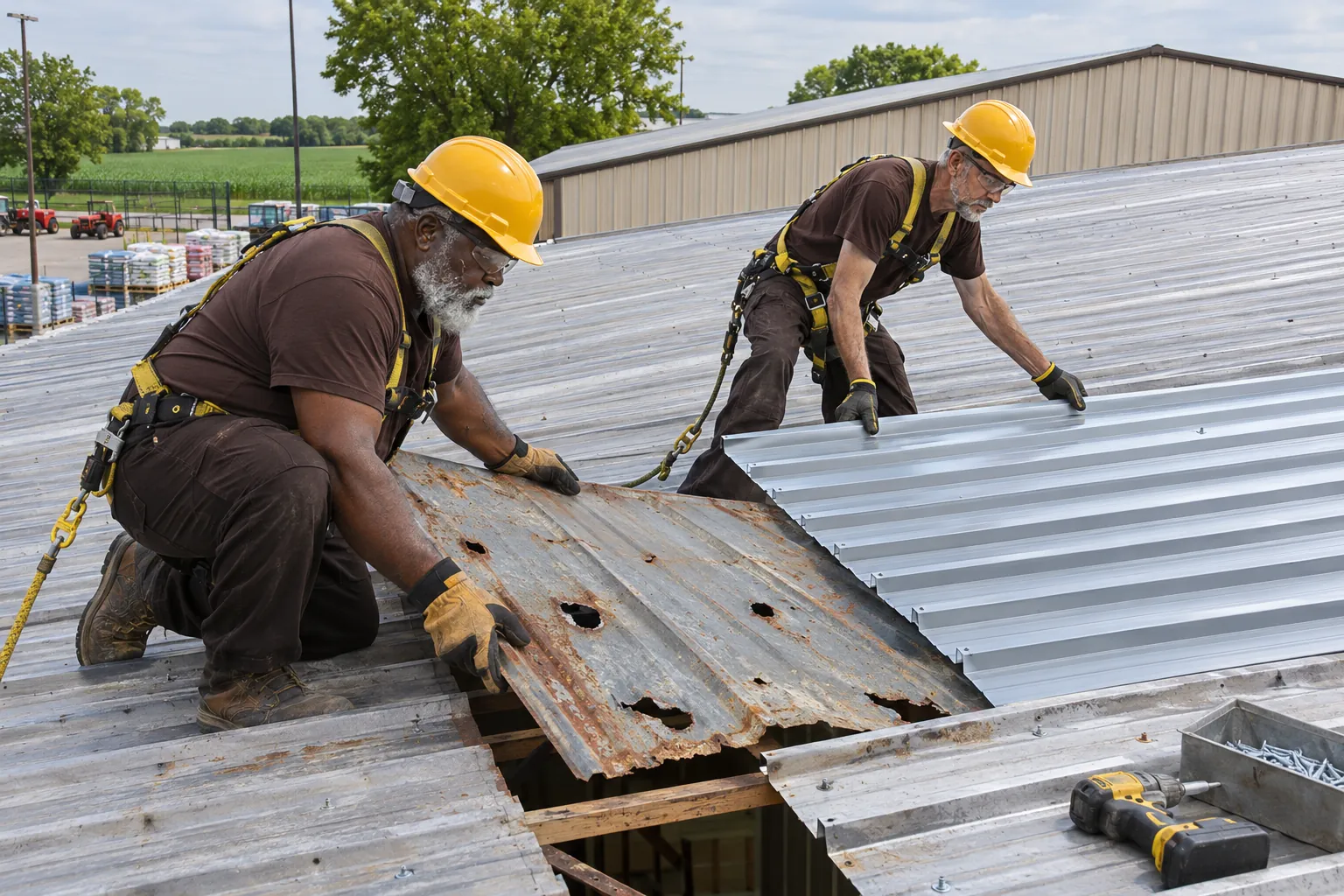
Metal panel roofs on shops, offices, and ag buildings.
Bargersville commercial roof repair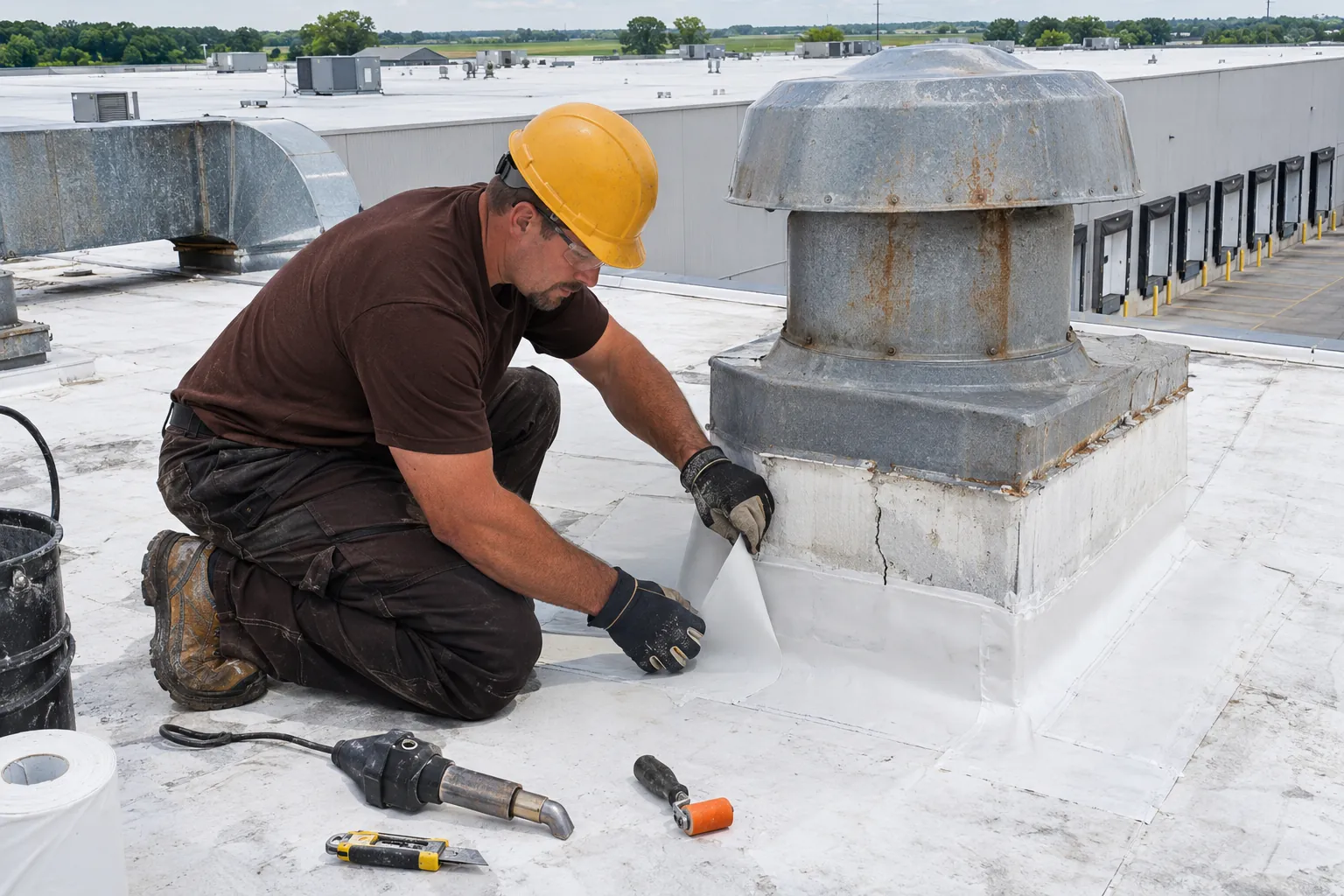
Office and retail roof leaks, water-tested after the repair.
New Whiteland commercial roof repair
TPO and EPDM roofs on distribution and industrial buildings.
Whiteland commercial roof repairStorefronts, shared walls, plants, and pricing.
Yes. Downtown, the work centers on parapet walls and built-up roofs; on plants, it centers on TPO and steel, with curbs and seams first.
Each repair is photographed so owners have a record for the building file.
Length of wall that needs flashing, number of open coping joints, the size of any wet area, and how materials reach the roof. A single scupper is a short visit; a full parapet run is a longer one. We price after the walk.
Work is scheduled around shop hours, materials come up from the alley, and nothing is staged on the sidewalk. Louder cutting happens before opening where the owner asks.
A roofer who checks the parapet from cap to base, patches in matching plies, and gives you photos and a written list. Ask how materials reach the roof on a downtown building.
Both owners have a stake, so we photograph the joint, describe it in writing, and price the repair for whoever authorizes it. The record helps neighbors split the cost.
Repairs that replace roof sections or deck usually go through the local building office before work starts. Small leak patches are a different case. We check which office covers the address.
Often, yes. Many older storefronts carry built-up or modified bitumen roofs, which take compatible plies, while plant roofs at the edge of town are usually TPO or steel. The walk confirms what is on each building before anything is ordered.
Shop owners point out what sits under the work area, and plastic or tarps go over it before any section is opened. Openings are closed at the end of each day.
Send the storefront or plant address and where water shows inside. We will walk the roof and the walls around it.