Failed Interior Drain Lines
You See
Water at a column base after every heavy rain.
What It Means
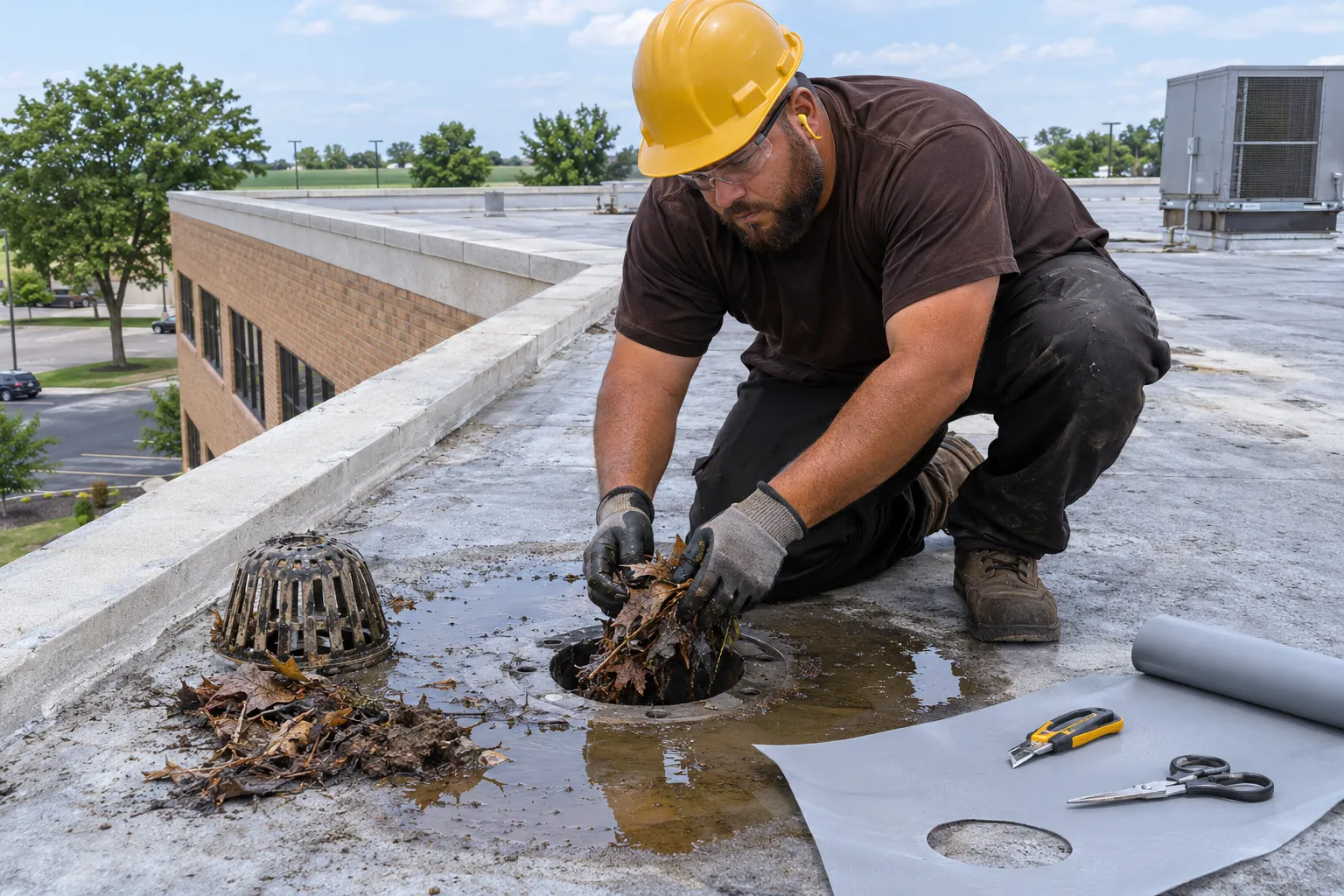
A drain bowl cracked or its line separated, so water drops into the building right where it should leave.
As a Shelbyville commercial roof repair contractor, we repair warehouse and industrial roofs section by section, tracing the few zones that cause most of the leaks.
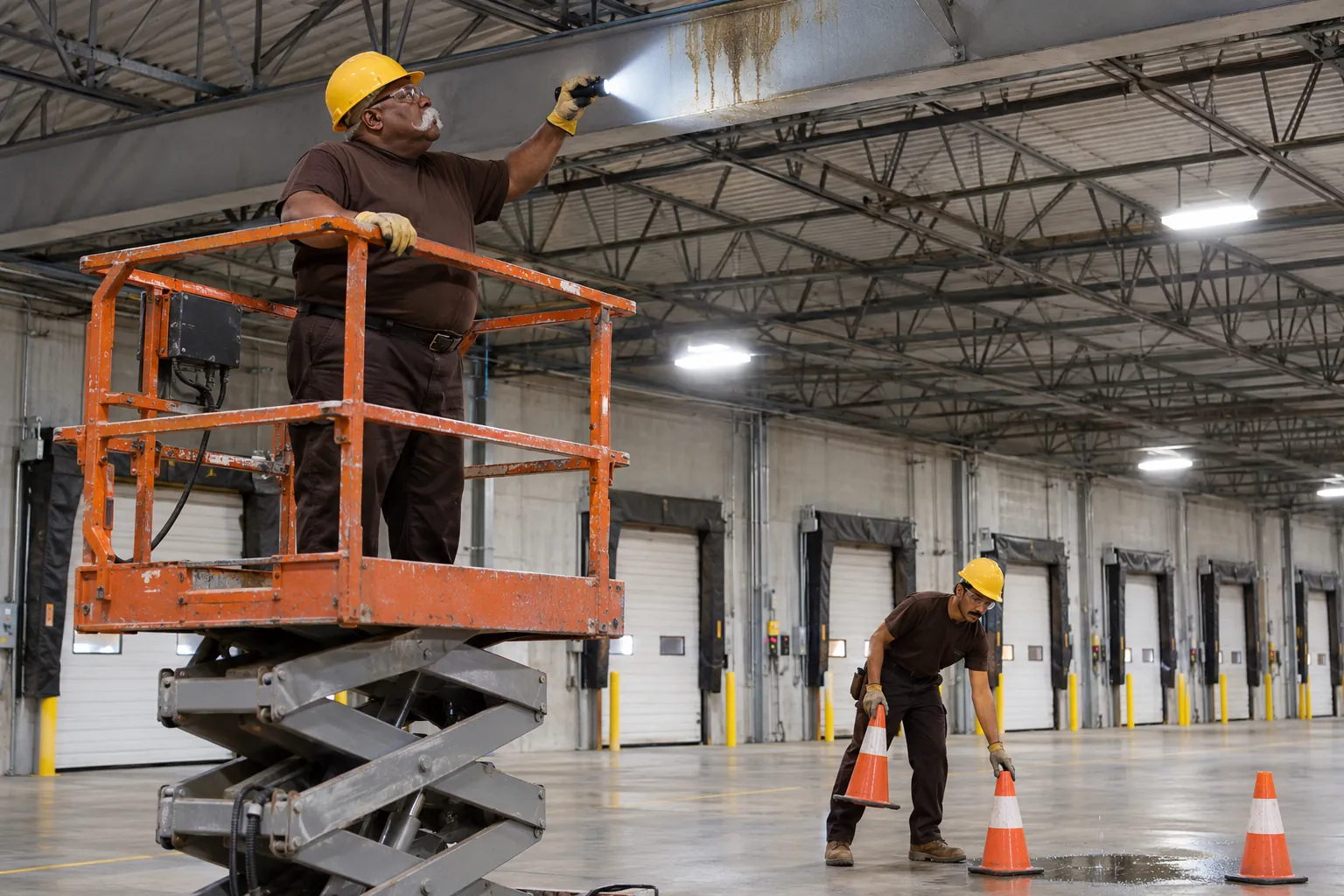
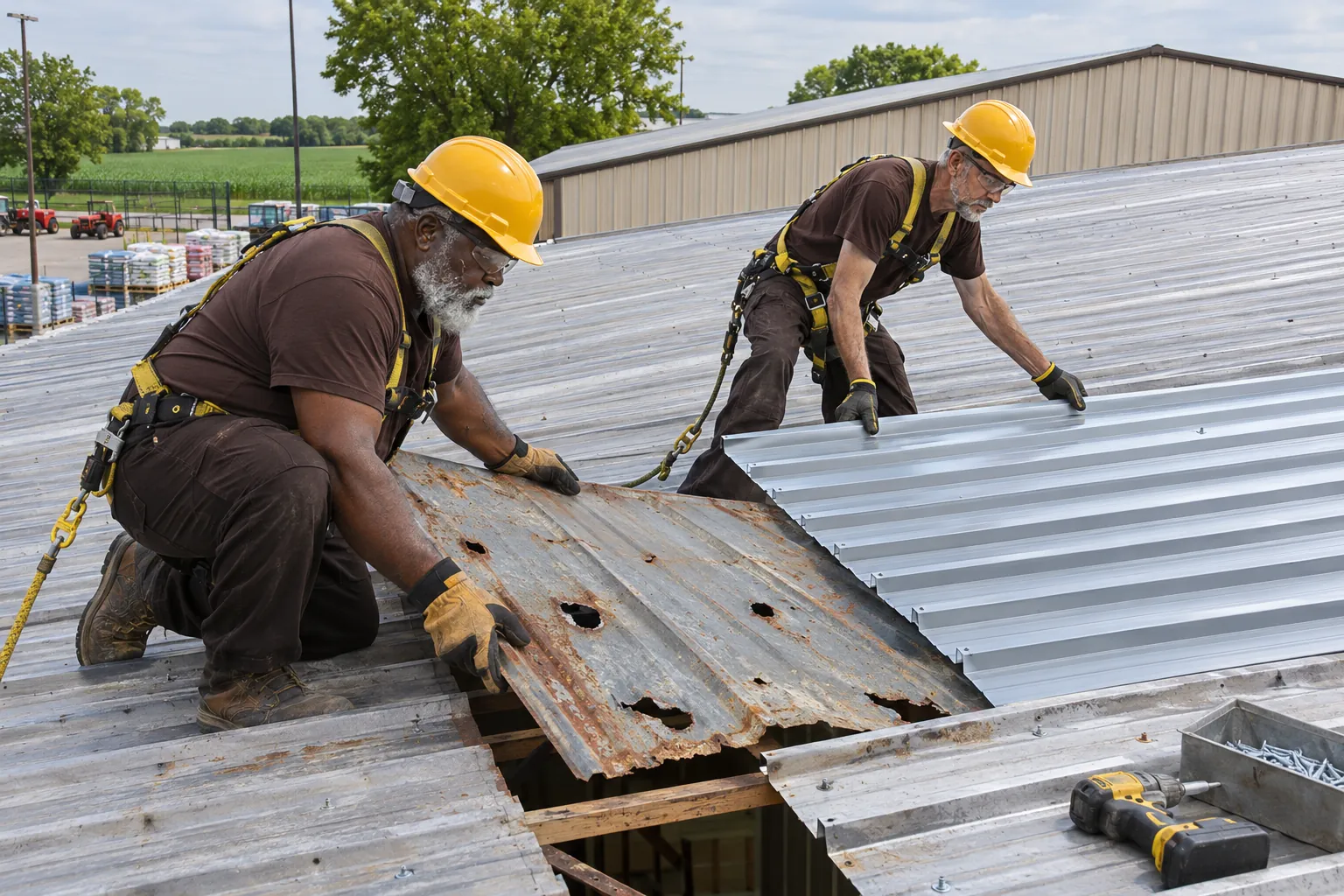
Shelbyville commercial roof repair on big warehouses starts with finding the zones doing most of the damage.
On a roof covering several acres, one or two problem areas tend to drive most of the leaks: a failed drain line, a run of open laps, or a cluster of curbs. Water then travels along the deck flutes and shows up aisles away.
So the trace starts at the drips and follows the deck uphill. Repairs go zone by zone, each zone closed before the next opens, while trucks keep loading at the docks.
Large roofs fail in patterns. These are the ones that send water into the racks.
Water at a column base after every heavy rain.
A drain bowl cracked or its line separated, so water drops into the building right where it should leave.
A line of drips along one aisle during storms.
Wind uplift worked a row of seams loose in the same direction, so several open together.
A puddle by the racks with no roof equipment overhead.
Water entered uphill and rode the steel deck flutes until a gap let it fall.
Rust spots on panels above the dock doors.
Truck exhaust and condensation at the dock line wear the steel faster than the rest of the roof.
Wet tile near the office corner of the warehouse.
Several units sit together over the office, and torn curb corners there let water in.
Leaks at several columns during a winter thaw.
Frozen drains hold meltwater across a wide roof, and it rises over the lowest laps.
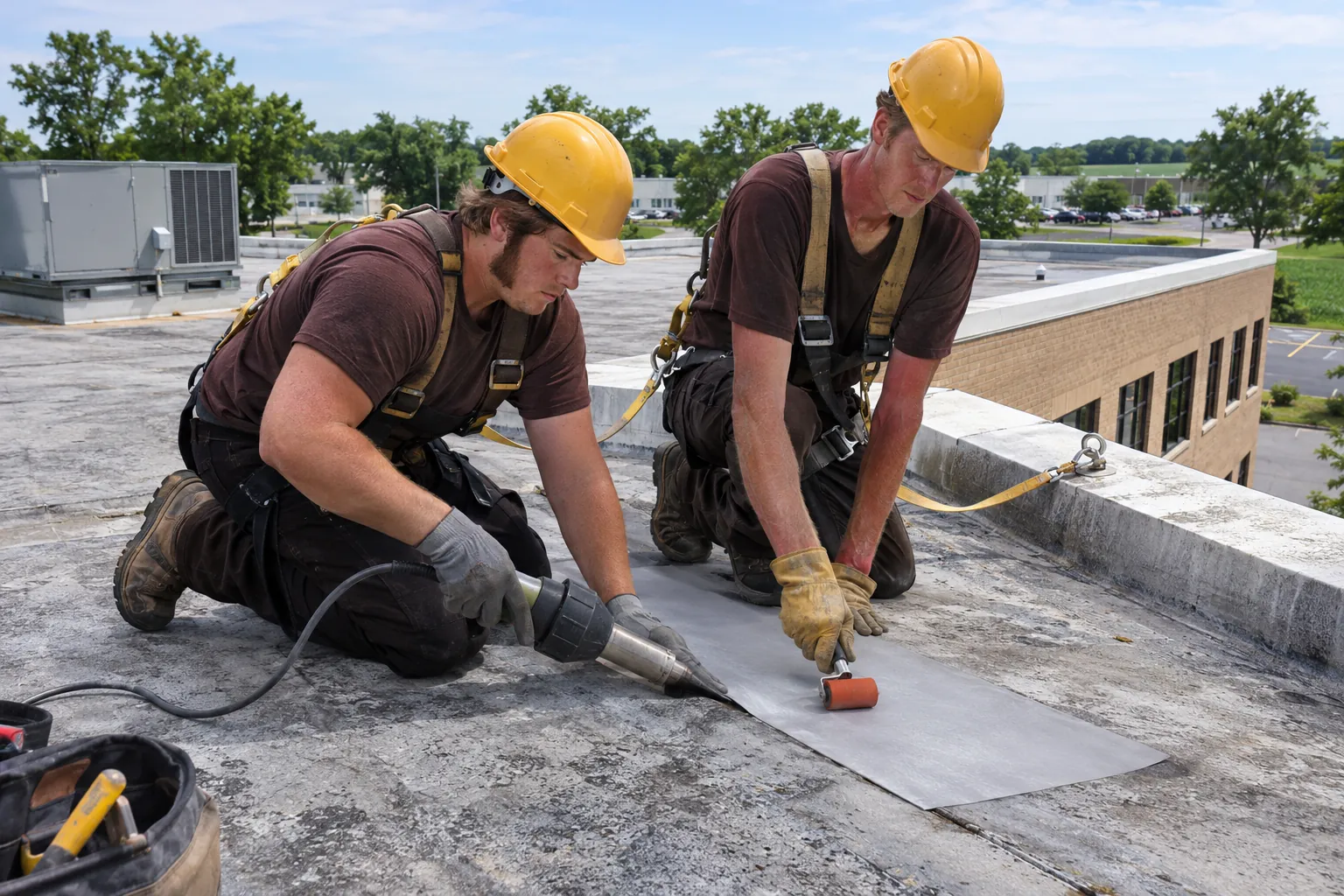
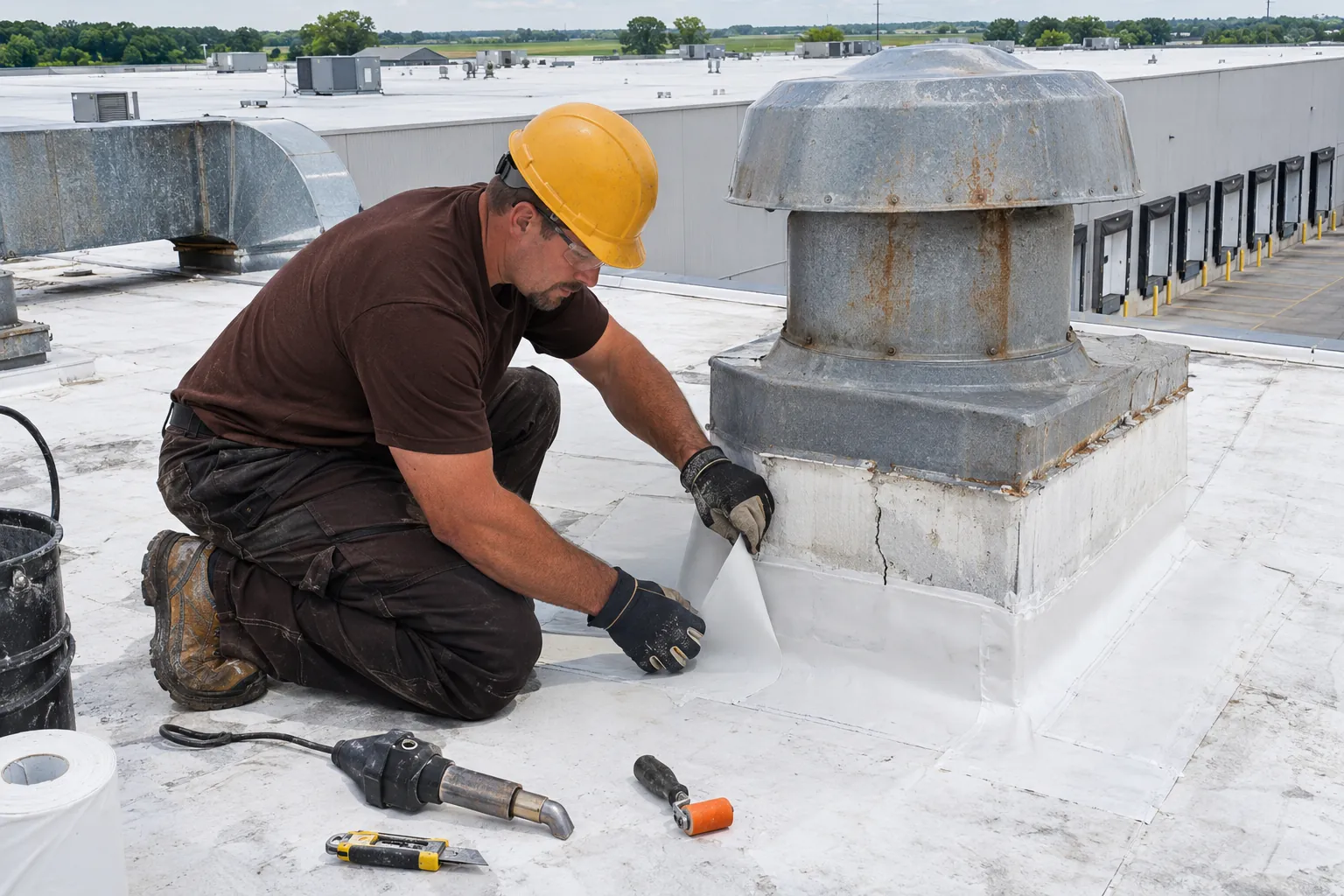
A warehouse roof before and after the leak zones are closed.
Four repairs handle most warehouse calls here.
Cracked bowls are replaced and clamps reset, and separated lines are flagged for the plumber with photos.
Open laps along a wind-lifted row are cleaned and welded or taped together, end to end.
Zones are scheduled around shipping, so the roof gets fixed while dock doors keep running.
Rusted panels over the docks are replaced in the same profile while trucks keep loading below.
On a large roof the drip and the opening sit far apart. Book an estimate and we will trace the deck path back uphill.
Five steps for a large warehouse roof.
Your staff marks every drip and stain on a floor plan, so the roof trace starts with real points.
From each drip, the deck flutes are followed uphill, with laps, curbs, and drains checked along the way.
Zones are priced and ranked by how much water each one lets in, with photos for every item.
Each zone is opened, repaired in matching material, and closed before the next one starts.
Photos and dates for every zone go into your file for the next inspection.
Besides Shelbyville, we take roof repair work in Greenwood and three nearby towns. Somewhere else? Call us or send us a message.
Downtown storefronts with parapets, plus plant roofs in TPO and metal.
Franklin commercial roof repair
Metal panel roofs on shops, offices, and ag buildings.
Bargersville commercial roof repair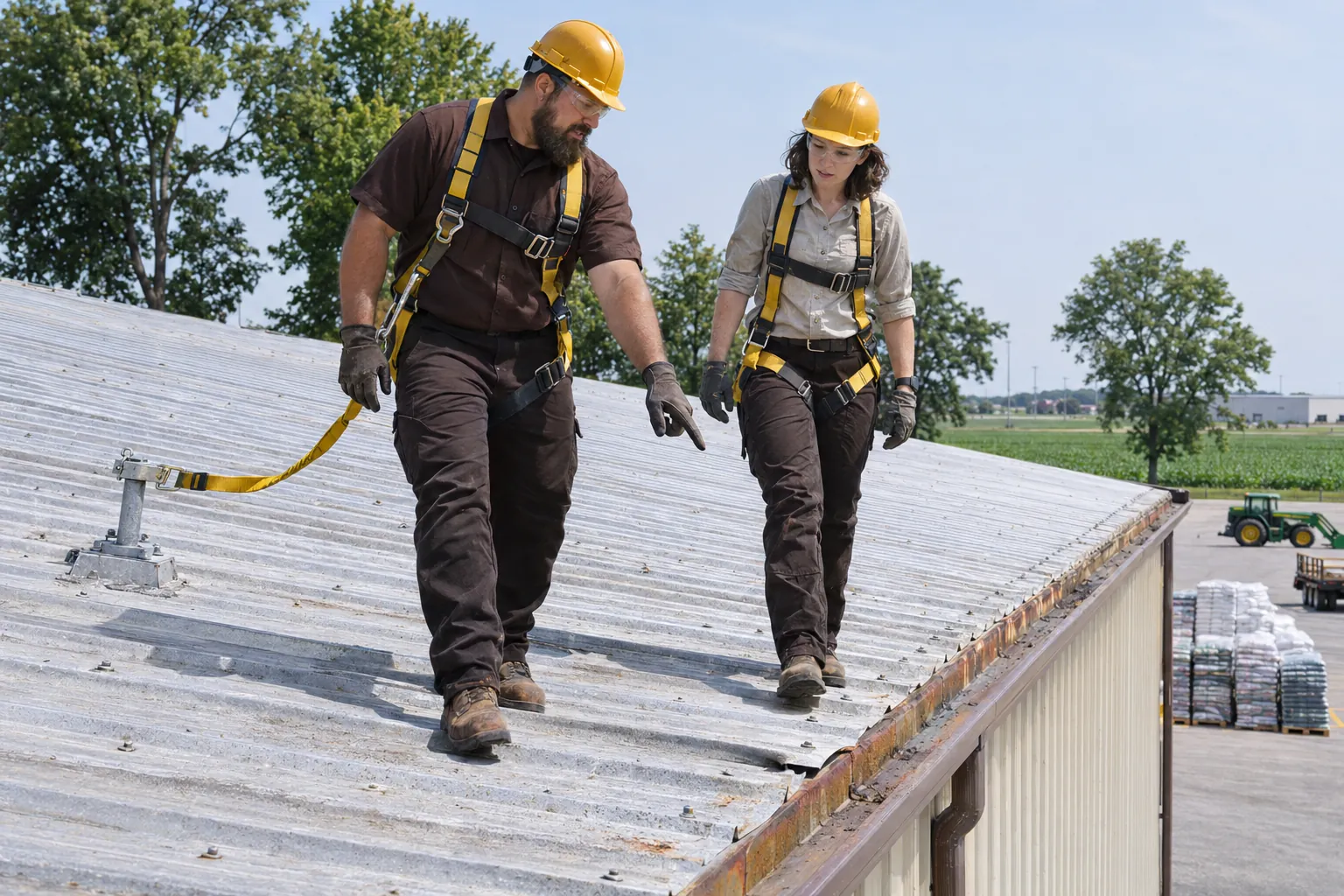
Office and retail roof leaks, water-tested after the repair.
New Whiteland commercial roof repair
TPO and EPDM roofs on distribution and industrial buildings.
Whiteland commercial roof repairWarehouses, docks, and how to choose a roofer.
Yes. Open seams, failed flashing, drain leaks, and damaged steel panels on warehouse and industrial roofs are the usual work.
Most large roofs have a few zones driving the leaks, so those get traced and closed first.
Yes. Lifts and material drops are placed away from the dock apron, and zones over the docks are repaired between truck schedules your shipping lead sets.
A roofer who traces leaks along the deck instead of patching above every drip, works in zones on large roofs, and gives you a ranked list with photos.
Large roofs need repeat visits: the first trace, the zone repairs, and checks after storms. A crew close by can return after the next rain to confirm each zone stays dry.
It depends on the number of zones and the work windows. Each zone is a separate step, so the worst one gets closed first and the rest follow on a schedule you approve.
Yes. Cores along each leak path show how far the water spread, and soaked board is cut out and replaced before the patch goes down.
Yes. Almost all of the work happens on the roof surface. Where a deck opening sits over racks, that aisle gets covered or closed only for the hours the opening is exposed.
A floor plan or sketch with each drip marked, the dates leaks showed up, and roof access details. Those three things cut the time spent on the roof.
Send the warehouse address and a floor plan with the drips marked if you have one. We will trace the roof zone by zone.