If Your Roof
Drips Only In Heavy Rain
Water shows up during downpours and stops once the rain eases.
Start WithDrains, scuppers, and laps checked

As a Greenwood commercial roof leak repair contractor, we trace stains and drips back to the opening on the roof, repair it, and replace the wet material.
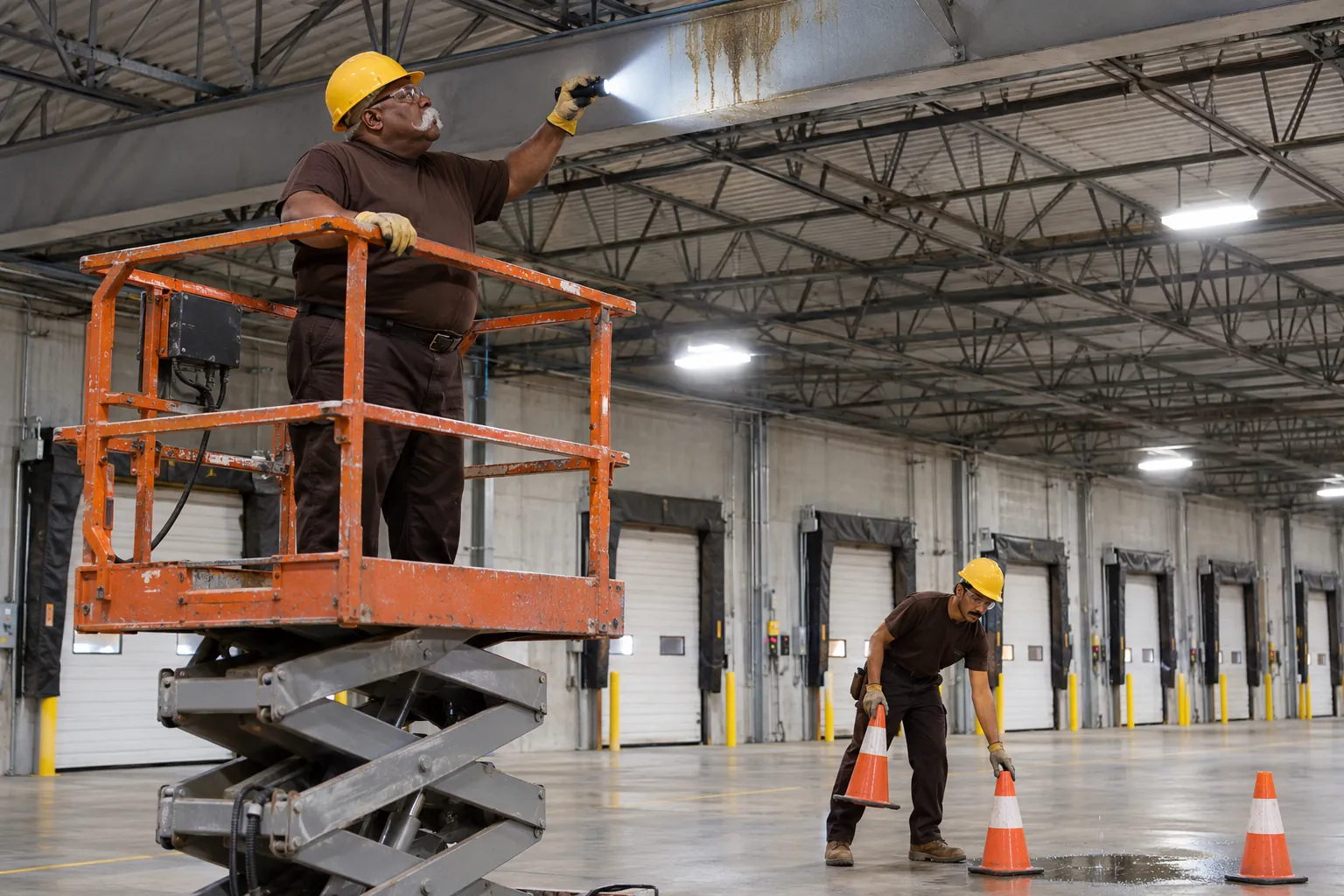
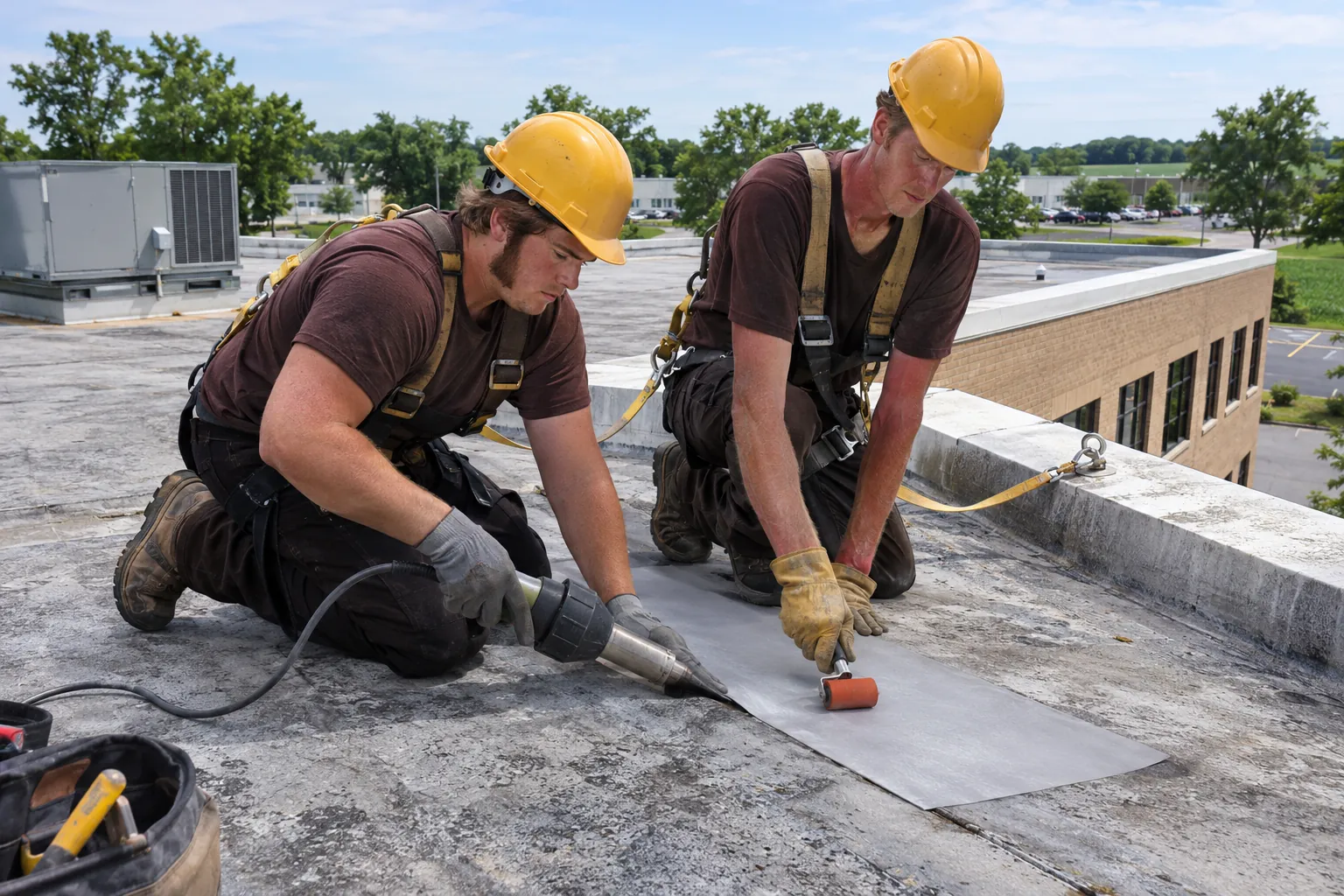
Greenwood commercial roof leak repair starts from what you see inside. Four common patterns, and where each one leads.
Water shows up during downpours and stops once the rain eases.
Drips start during a thaw even when it has not rained.
Tile near a diffuser turns brown after storms.
Stains spread across the building and new ones follow each repair.
The drip marks where water exits. These are the openings we find most often upstream of it.
A stain beside a supply diffuser under the rooftop unit.
The flashing at the curb corner has torn. Rain runs down inside the curb wall and onto the deck.
A drip directly below a plumbing vent or conduit stack.
Rubber boots crack in sun and cold. Water runs down the pipe and through the deck opening.
Wet drywall along an outside wall after wind-driven rain.
Coping joints opened or base flashing pulled off the wall, so water gets behind the membrane at the parapet.
Leaks during a warm spell after snow, with no rain at all.
Ice in the drain holds meltwater on the roof. It rises over laps and flashing that rain normally runs past.
A puddle in an aisle far from any roof equipment.
Water entered upslope and ran inside the steel deck flutes until it found a gap to drip through.
Drips under a roof hatch or around a skylight frame.
Gaskets dried out or the curb flashing split, so wind-driven rain gets past the frame.
The repair depends on what the trace finds.
Torn curb corners get new membrane flashing with welded or taped corners and fresh sealant at the counterflashing.
Cracked rubber boots at vents and conduit are cut away and replaced with new boots clamped and sealed.
Coping joints are resealed, base flashing is stripped in, and termination bars are refastened along the wall.
Insulation soaked along the leak path is cored, cut out, and replaced so the repair sits on a dry base.
Here is the building before and after a traced leak repair.
Every storm soaks more insulation along the leak path. Book an estimate and we will trace it from the drip back to the roof.
Five steps from the stain to a closed opening.
We mark where water lands inside and note the deck direction, so the trace on the roof starts in the right place.
On the roof, every curb, boot, lap, and wall flashing upslope of the drip is checked along the deck flutes.
The opening gets photographed and priced, along with any wet board found along the path.
The curb, boot, lap, or flashing is repaired in matching material and the wet board beside it is replaced.
Where the roof type allows, a water test confirms the opening is closed, and the repair is photographed.
Membrane roofs, steel roofs, and plant roofs each have their own service.
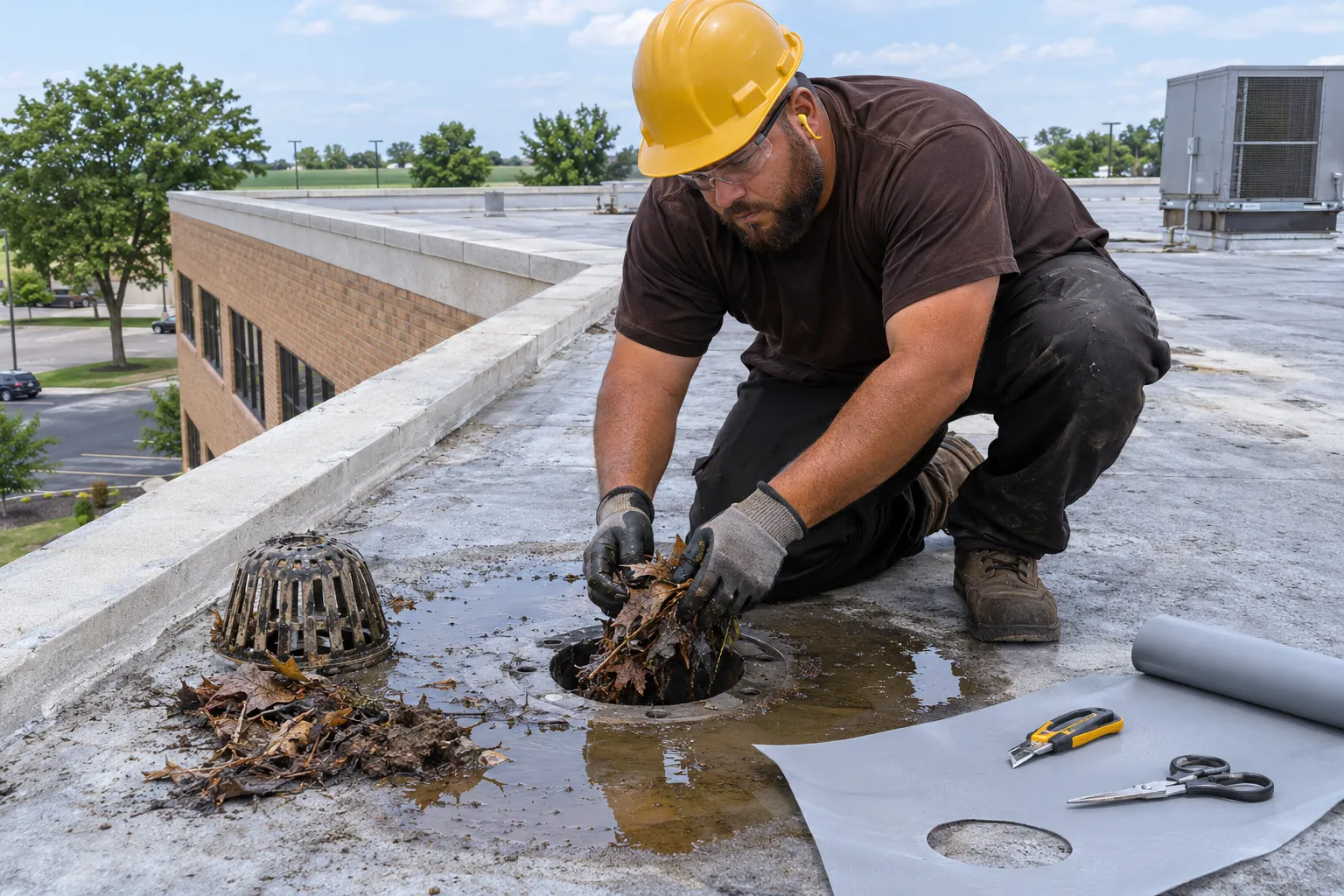
Seams, blisters, and drains on low-slope membrane roofs.
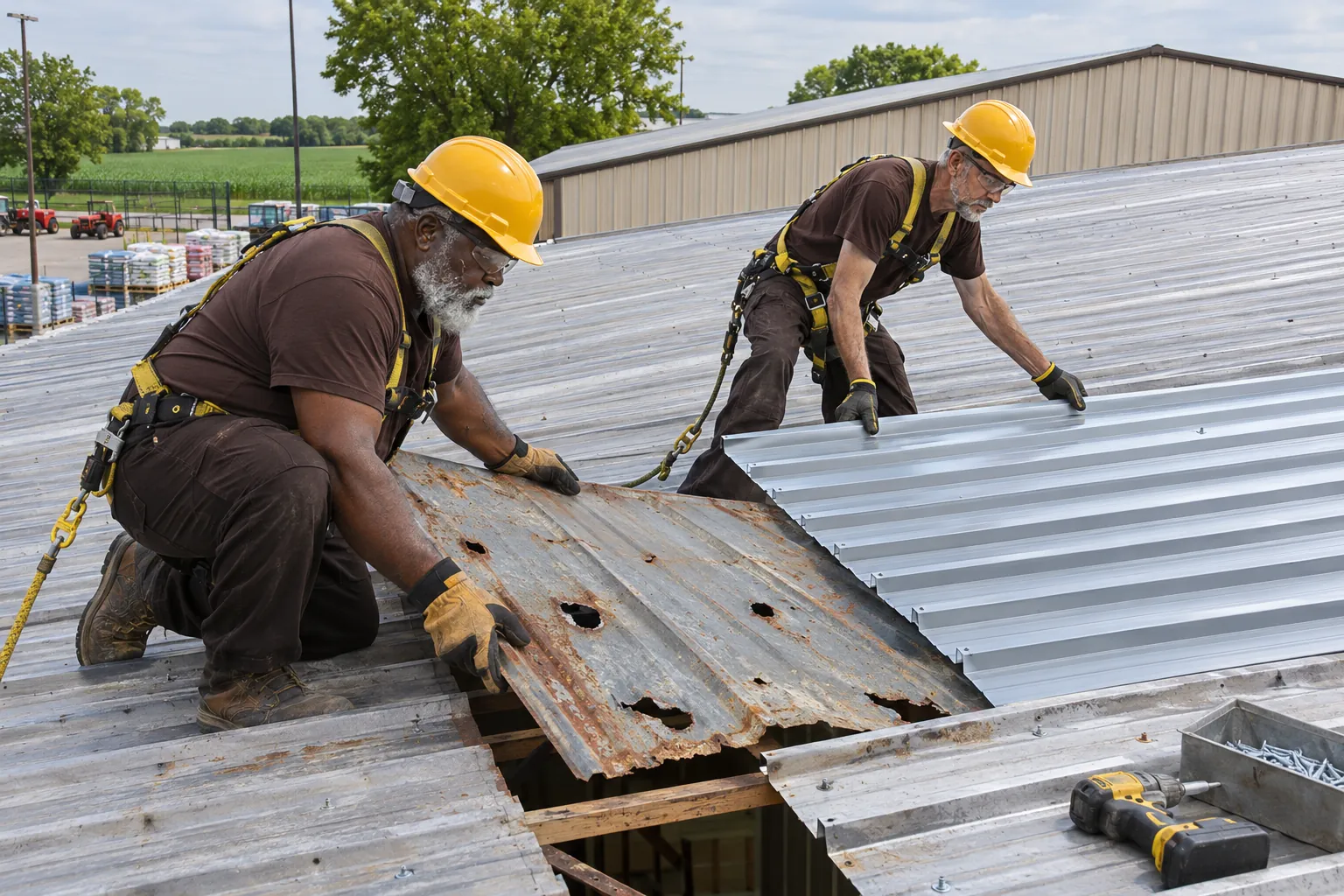
Screws, laps, trim, and rusted panels on steel roofs.
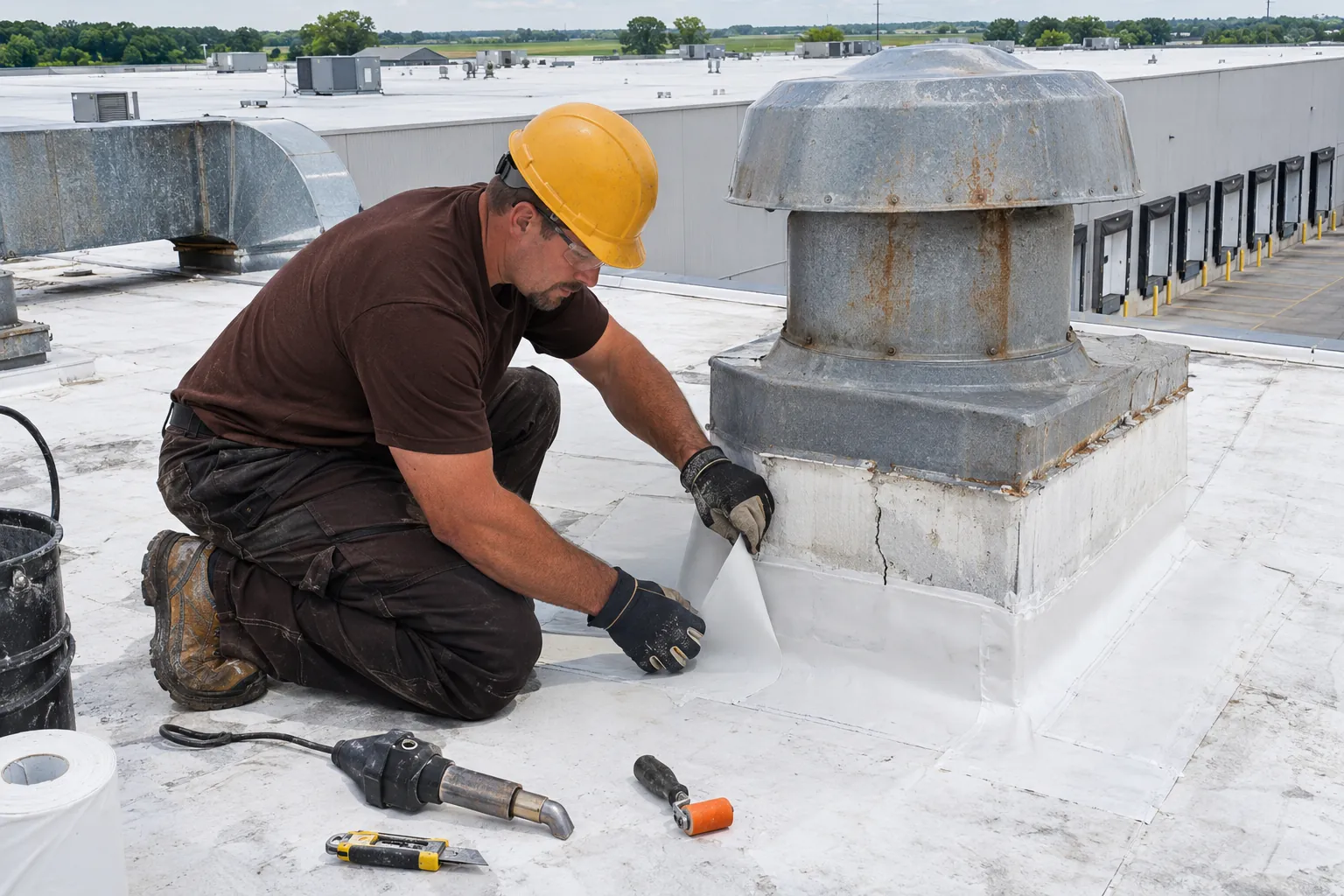
Fan curbs, exhaust areas, and roofs over production lines.
Cost, leases, snowmelt, and parapet walls.
The lease decides. Gross leases more often keep leaks with the landlord, and net leases can move repair costs to tenants.
Tenants should report a leak in writing right away and protect stock. Our photos of the source help both sides settle who pays.
Finding the source, the roof type, the size of the damaged area, how much board is wet, and access to the opening. A cracked boot is a short repair; a leak traced through a soaked section takes longer. The price follows the trace.
Meltwater pools behind snow, against parapets, and around frozen drains, then rises over laps and flashing that rain runs past. Seams opened by cold nights let it in. We trace these leaks to drains, wall flashing, and laps.
Coping joints, counterflashing, and the membrane turned up the wall are checked first. Repairs run from resealing coping joints to new base flashing and refastened termination bars.
On big roofs, water rides the steel deck flutes or soaks through the board before it finds a gap. We follow the flutes uphill from the drip and check every opening along that line.
Yes. A temporary seal can hold over stock or equipment until the permanent repair is scheduled, and it gets replaced with the matching repair on the next visit.
Tell us where water lands inside and when it happens. We will trace it on the roof and price the repair.