Ponding Along Low Edges
You See
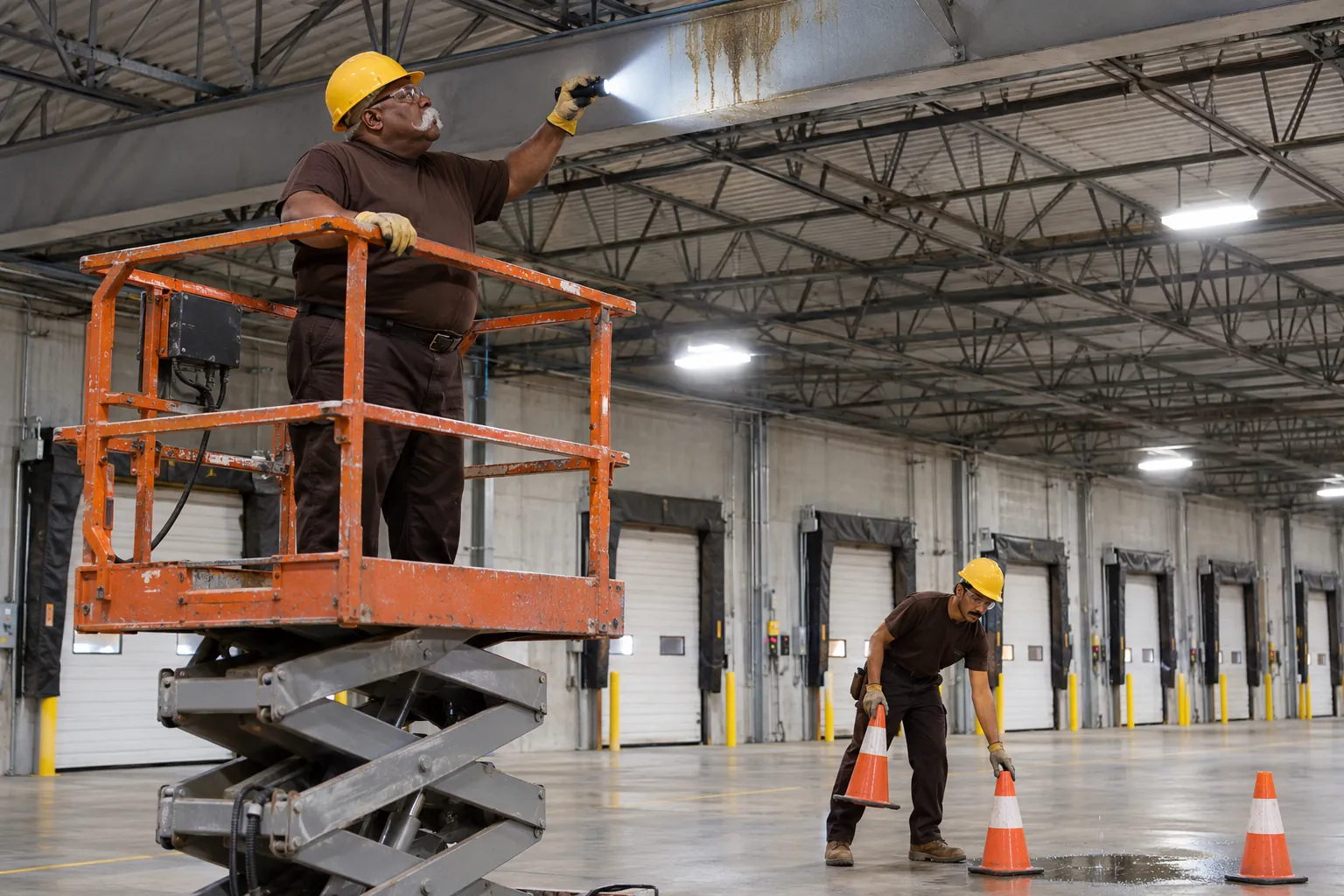
Water lines and dirt along the roof edge days after rain.
What It Means
The deck sags slightly at the edge, so water collects there and works into the perimeter seams.
As a Whiteland commercial roof repair contractor, we repair TPO and EPDM roofs on distribution and industrial buildings, with drainage checked on every visit.
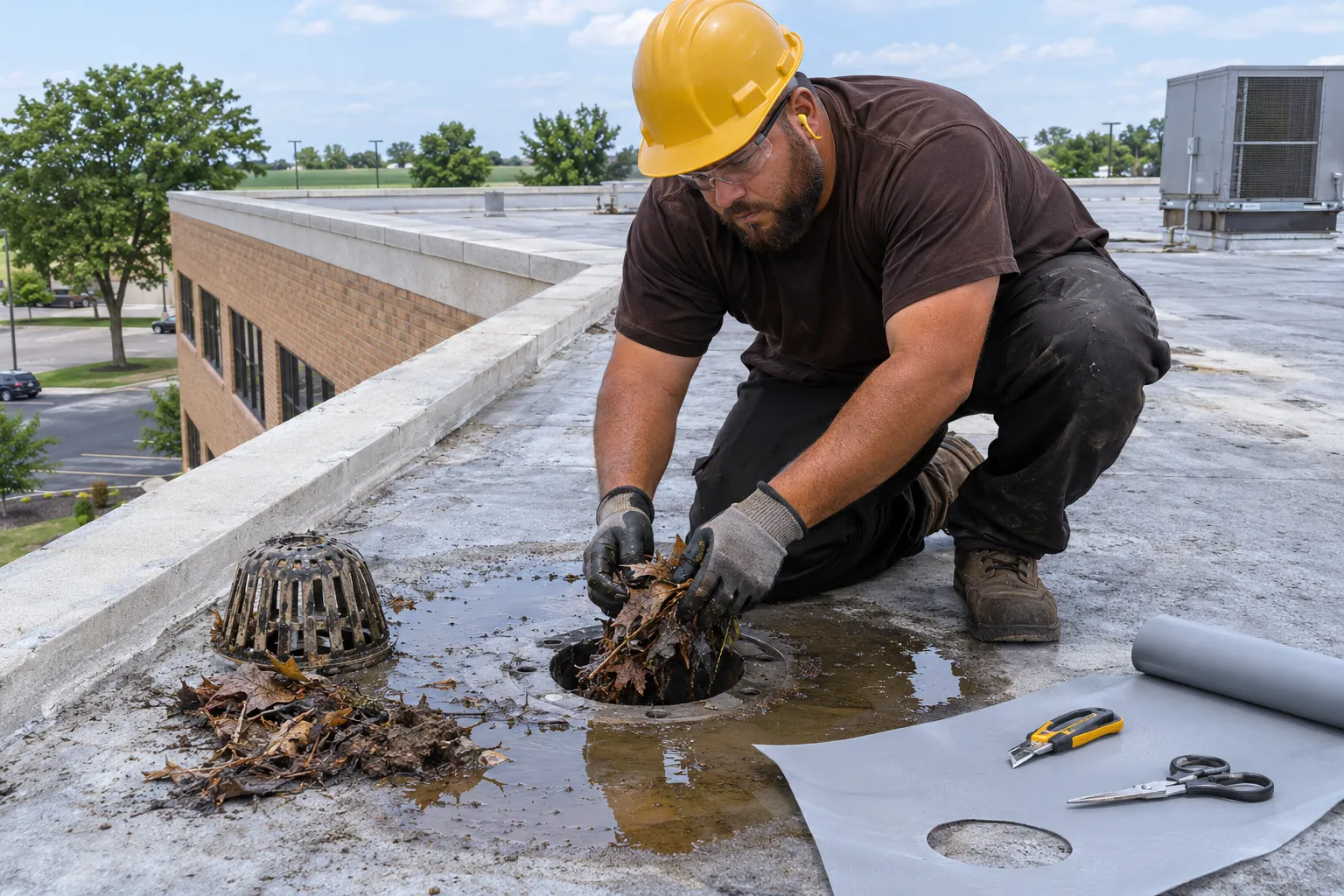

Whiteland commercial roof repair centers on wide single-ply roofs over distribution and industrial floors.
Big flat roofs here hold water near drains and along low edges, and that standing water wears the membrane and finds every open lap. Equipment service adds punctures along the paths between units.
Every repair visit includes a drainage check: drain heights, strainers, and the low edges where water sits longest. Areas that need more than a patch are noted on the list for later work.
Wide single-ply roofs fail in a few repeat places.
Water lines and dirt along the roof edge days after rain.
The deck sags slightly at the edge, so water collects there and works into the perimeter seams.
Small holes and cuts between the hatch and the units.
Dropped screws and tool drags pierce the sheet where mechanical crews walk.
A lifted seam edge at a roof corner.
Corners take the strongest wind pull, so seams there peel first on wide roofs.
A ring of standing water around a drain bowl.
The drain sits above the surrounding deck, so water stays put until it evaporates.
Bubbles in the membrane close to the low points.
Water sitting near the drains gets under old patches and lifts the layers.
Split seams along the low edge after a hard winter.
Ponded water froze along the edge, and the ice pried laps open as it expanded.
A distribution roof before and after a repair visit.
Four repairs cover most distribution roof calls here.
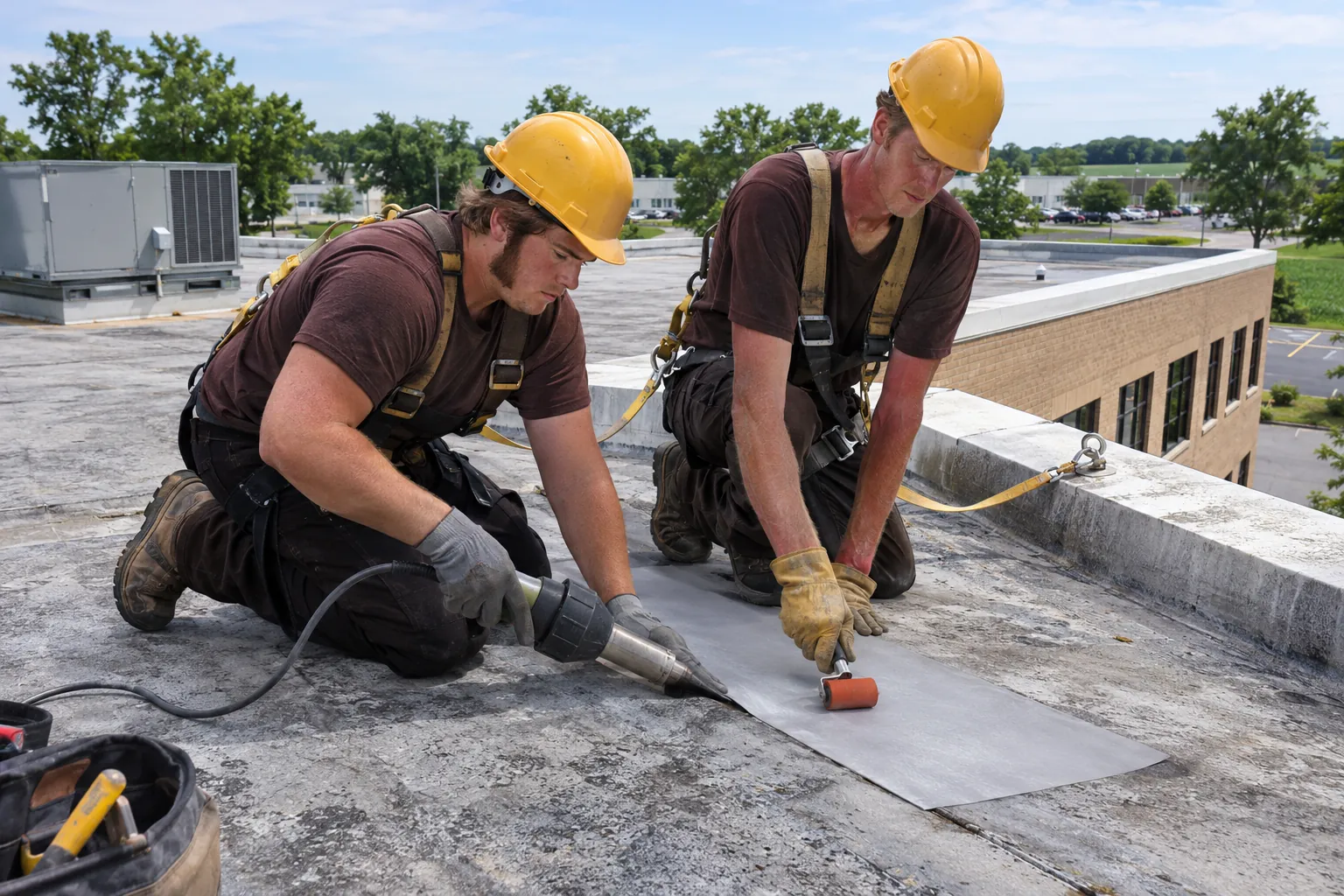
Seams and punctures on wide TPO and EPDM roofs are patched in the same membrane over dry board.
High-set drains get new clamps and tapered fill so water reaches the bowl and leaves the roof.
Price follows the membrane, the number of punctures and seams, any wet board, and drain work.
Pads along service routes protect the membrane where mechanical crews walk every month.
Standing water finds the nearest open seam. Book an estimate and we will check the drains and low edges.
Five steps on a wide single-ply roof.
Low edges and drains are checked first, since that is where water sits longest on wide roofs.
Service paths are walked slowly, and every cut and hole is marked for patching.
Patches, drain resets, and seams are listed with photos and prices, with drainage notes for later work.
TPO patches are welded, EPDM patches are taped, and wet board under any opening is replaced.
Repairs and any remaining low spots are photographed so the next visit starts with a record.
Whiteland is part of the area we cover with Greenwood and three other towns. Elsewhere? Call us or send us a message.
Downtown storefronts with parapets, plus plant roofs in TPO and metal.
Franklin commercial roof repair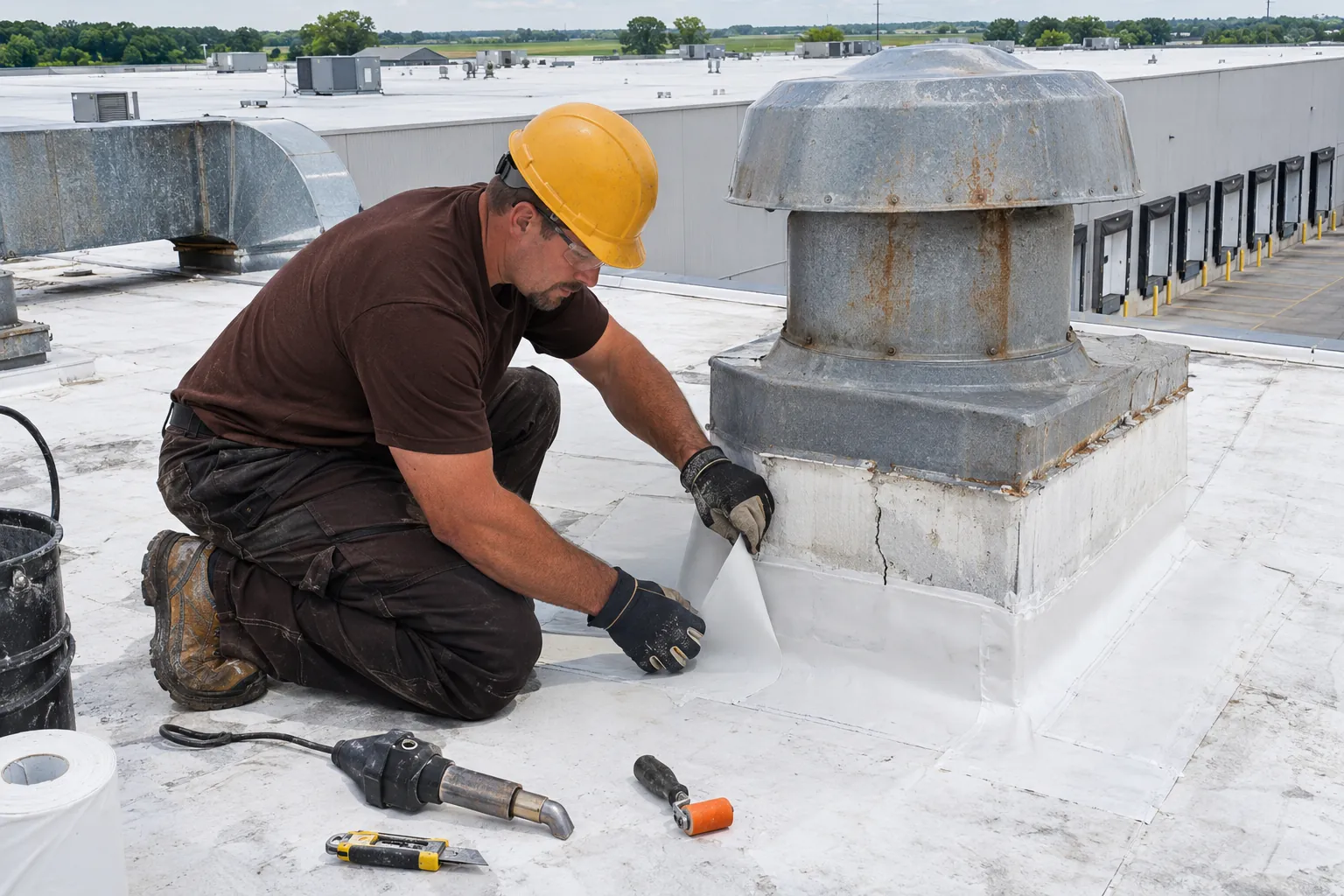
Warehouse and industrial roofs, with problem areas traced first.
Shelbyville commercial roof repair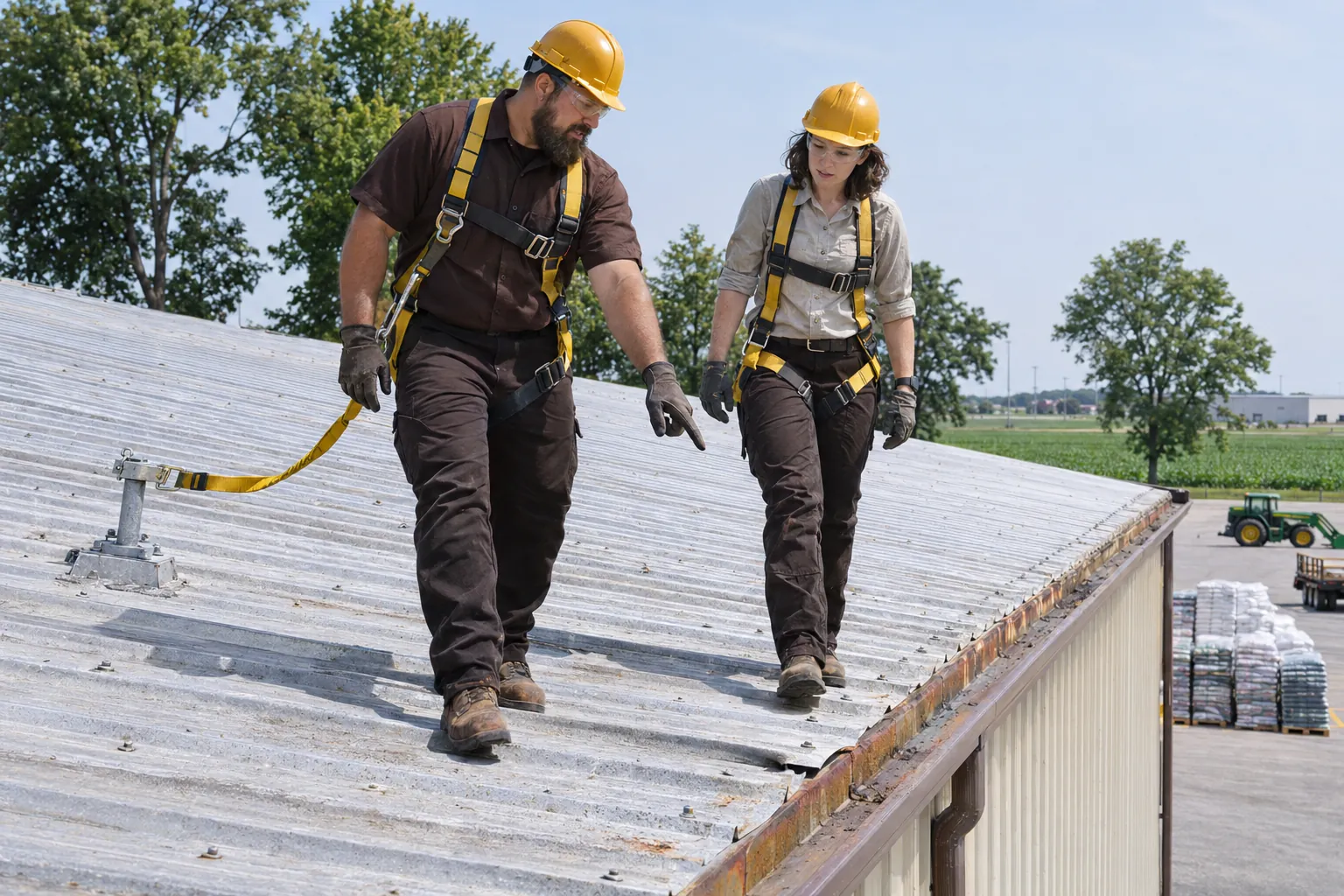
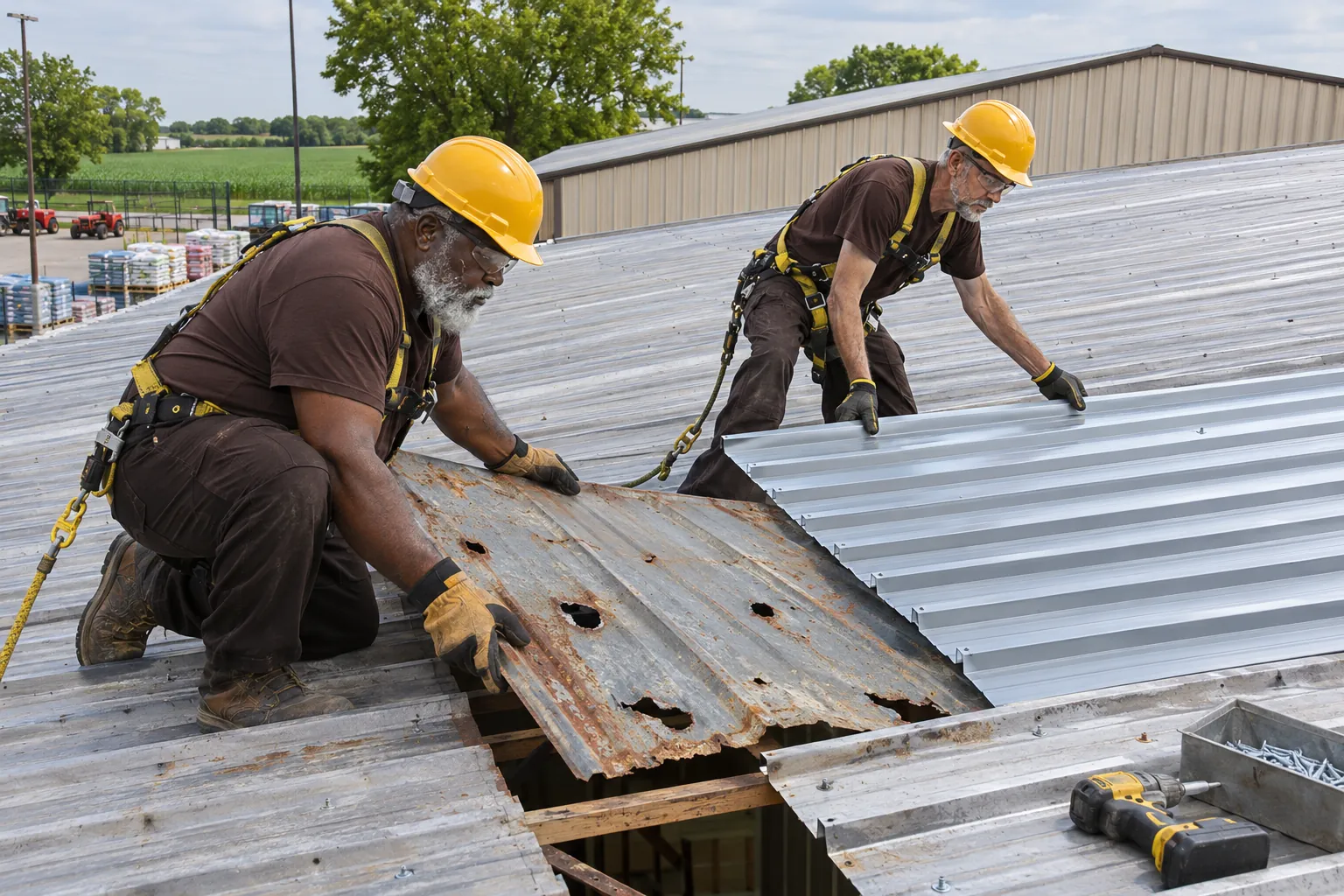
Metal panel roofs on shops, offices, and ag buildings.
Bargersville commercial roof repair
Office and retail roof leaks, water-tested after the repair.
New Whiteland commercial roof repairDistribution roofs, drainage, punctures, and cost.
Yes. TPO and EPDM seams, punctures from equipment service, drain leaks, and blisters are the usual work here.
Because these roofs pond near drains and low edges, drainage gets checked on every visit.
The membrane type, how many punctures and seams need work, how much board is wet, and whether drains need resetting. We price each item after the walk.
A roofer who patches in the same membrane, checks drainage while on the roof, and gives you a list with photos that separates repairs from items to plan for.
Wide roofs need checks after storms and after mechanical service visits. A crew close by can walk the service paths again whenever new equipment work happens.
Small low spots near drains can get tapered fill during the visit. Larger sagging areas are noted with photos so you can plan that work separately.
Yes. Pads along the routes mechanical crews use spread their weight and keep dropped screws off the membrane.
The lifted edge is cleaned back to sound membrane, then a TPO cover strip is welded over it or an EPDM seam is primed and taped. Corners get checked on every visit, since wind pulls hardest there.
Service visits are the main source of punctures on distribution roofs. Walkway pads, plus a walk of the service paths after major equipment work, catch the damage before it reaches the board.
Yes. Lifts and material drops stay clear of dock aprons and truck lanes, and roof work over the docks is timed around your shipping schedule.
Yes. TPO patches are heat-welded to cleaned sheet, and EPDM patches are primed, taped, and rolled. Each repair uses the membrane already on the roof.
Service paths and the areas around each unit are walked slowly, and wet spots in the board are checked with cores. Every hole is marked and photographed before patching.
Send the building address and the membrane type if you know it. We will walk the drains and edges first.