Torn Curb Corners
You See
A stain over a desk near a supply diffuser.
What It Means
The curb flashing tore at a corner where technicians step, so rain runs inside the curb.

As a New Whiteland commercial roof repair contractor, we trace leaks on offices, shops, and light industrial buildings and water-test each repair where the roof allows.
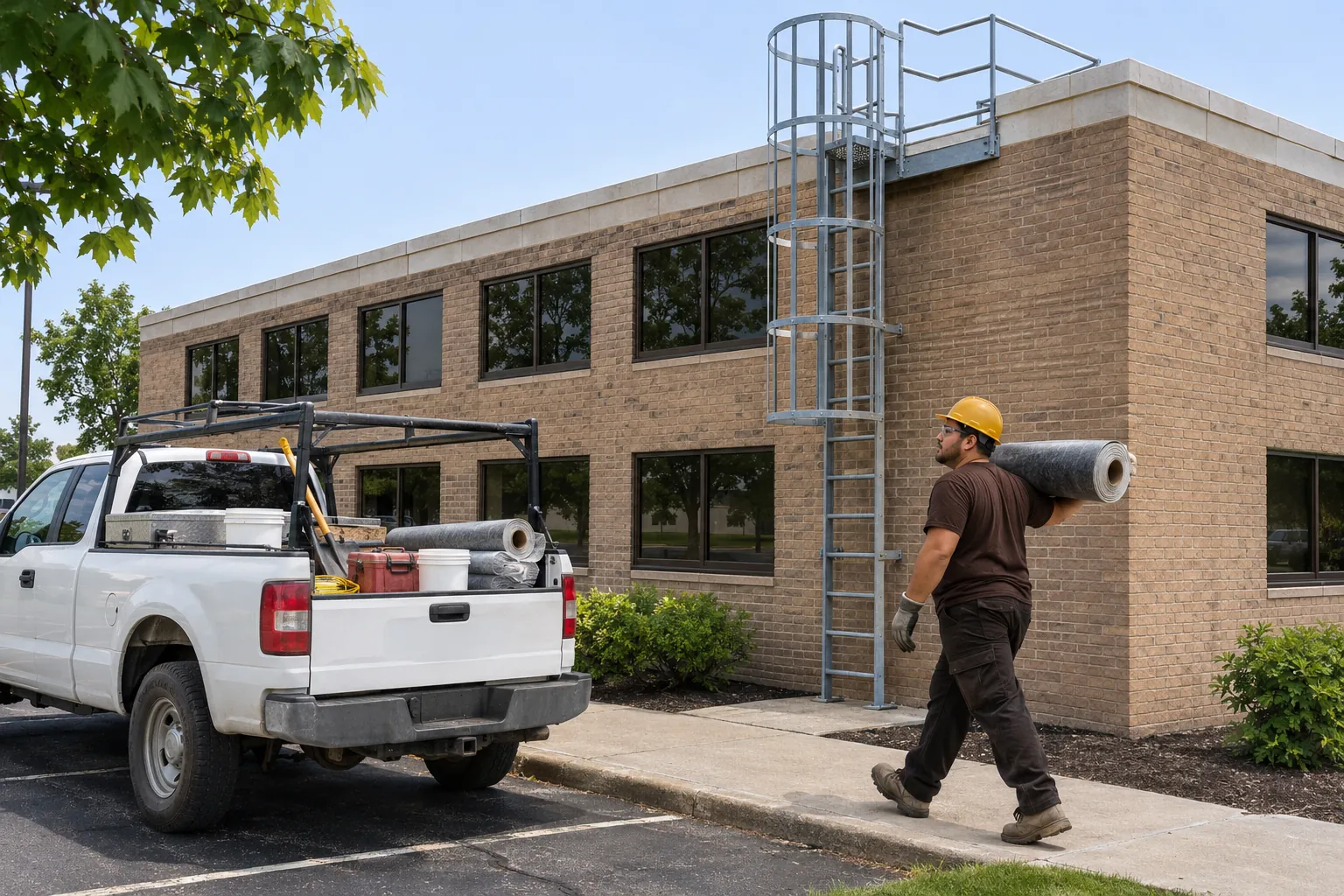
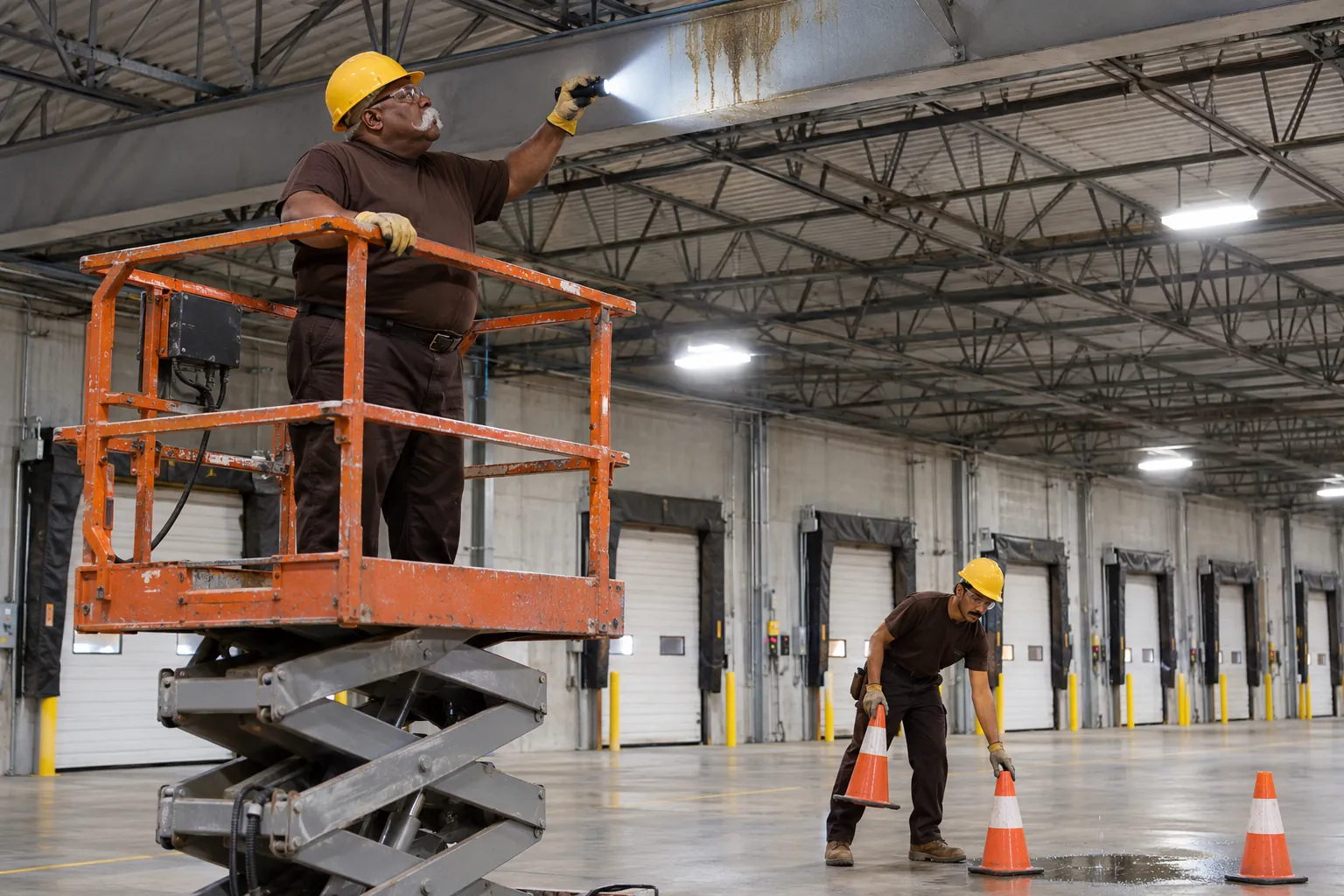
New Whiteland commercial roof repair calls usually start with a stain over a desk, a shelf, or a sales floor.
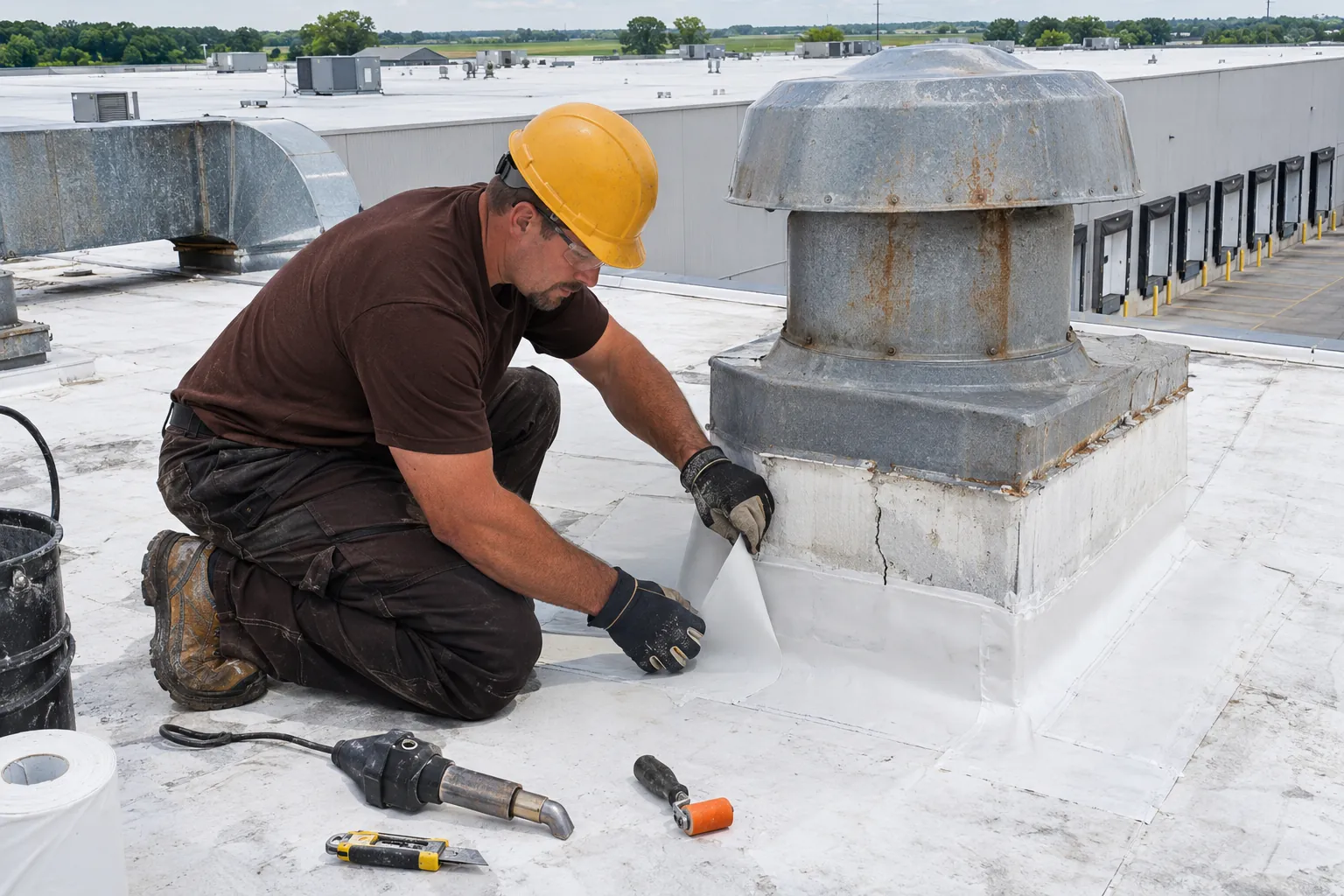
On offices and small retail buildings, rooftop units sit right over working space. Torn curb corners, cracked pipe boots, and loose wall flashing let water drop straight onto people and stock.
We follow the stain to its source, repair it in matching material, then run water over the repaired area where the roof type allows. That test shows the owner the right opening was closed.
Small commercial roofs leak from a handful of details. These come up most.
A stain over a desk near a supply diffuser.
The curb flashing tore at a corner where technicians step, so rain runs inside the curb.
A drip in a restroom or break room below a vent stack.
Rubber boots split after years of sun and freezing nights, letting water down the pipe.
Soaked drywall along an exterior wall after a storm.
Wind-driven rain got behind flashing that pulled away from the wall above the roof.
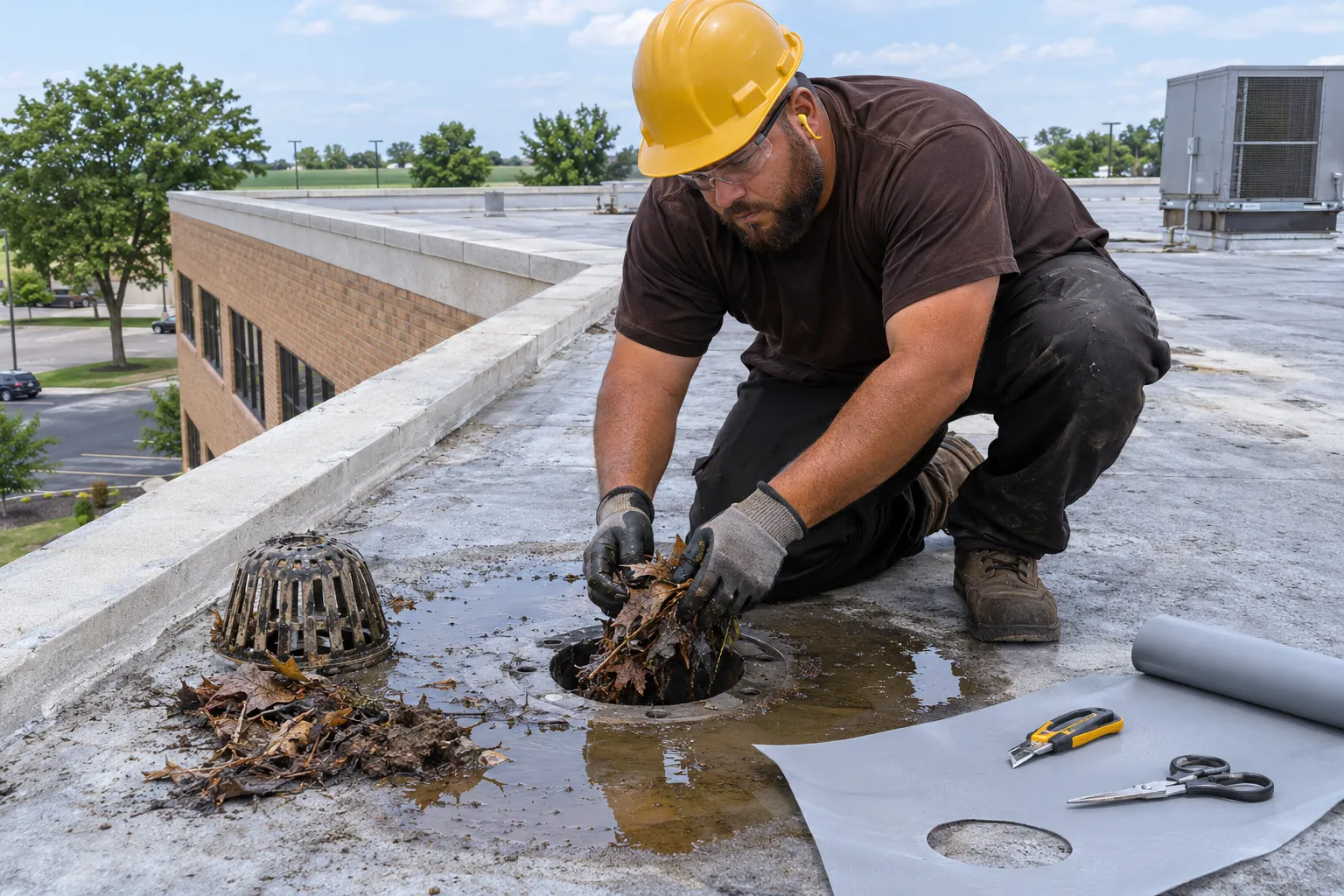
Water standing on a small roof and a stain near the back wall.
Leaves filled the strainer, so water rose over the lowest seams around the drain.
Wet spots under the unit on dry summer days.
The condensate line drips onto the membrane, and the water seeps into a nearby seam.
A drip below the roof hatch in a back hallway.
The hatch gasket dried out and the curb flashing cracked, letting rain in around the frame.
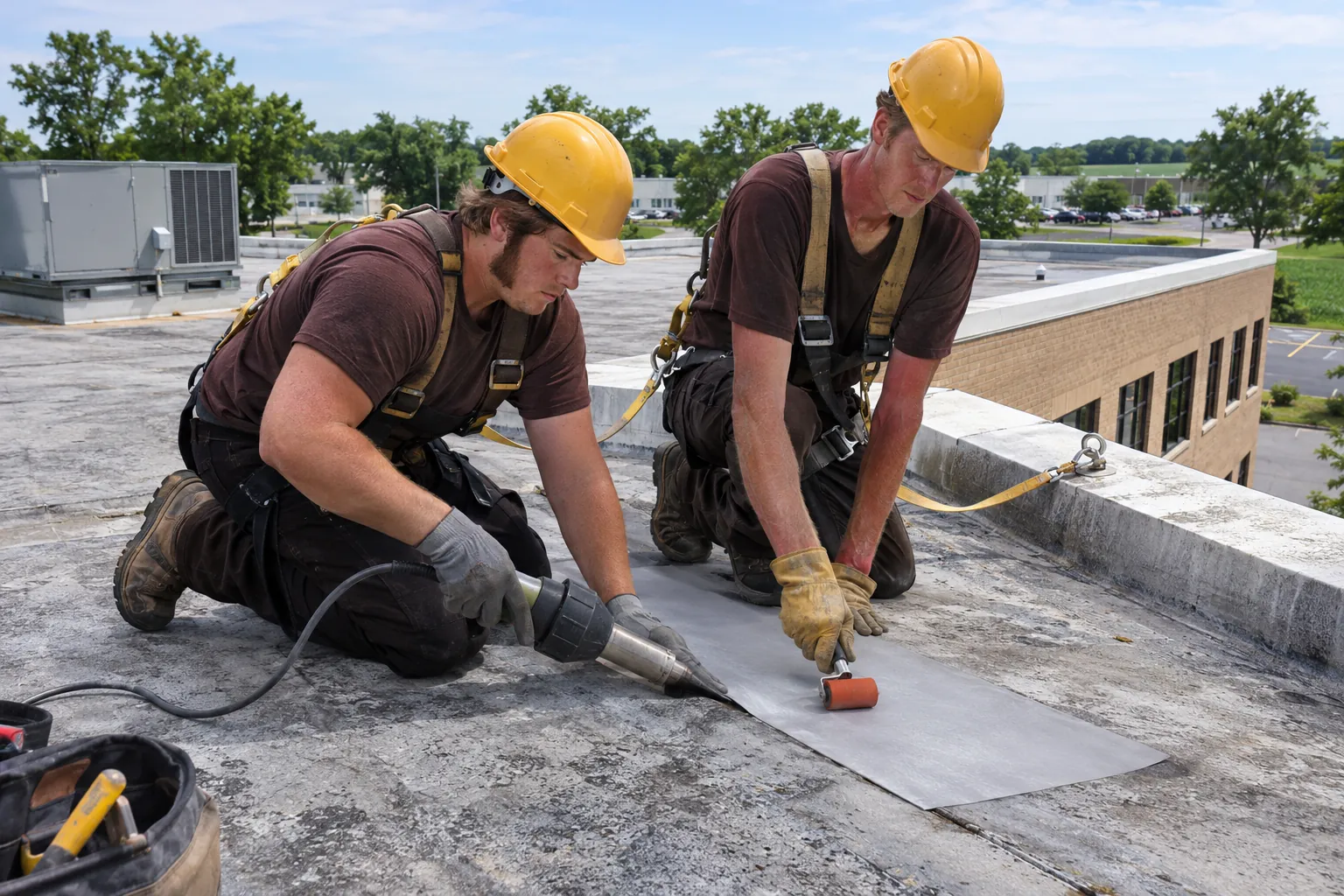
A small commercial roof before and after a traced repair.
Four repairs handle most office and shop leaks here.
Torn corners are cut back and new membrane goes up the curb with welded or taped corners.
Cracked boots at vents and conduit come off, and new boots are clamped and sealed to the membrane.
Price follows how hard the source is to find, the roof type, any wet board, and access to the opening.
Where the roof allows, the repaired spot is flooded with a hose to confirm the opening is closed.
Small roofs leak right over working space. Book an estimate and we will trace it and test the repair.
Five steps from the stain to a tested repair.
We note where the stain sits inside and what roof equipment is above it before going up.
Curbs, boots, wall flashing, drains, and laps near the stain are checked, then the rest of the roof.
The opening is photographed and priced, so you see what failed before approving.
The curb, boot, or flashing is rebuilt in matching material, with any wet board replaced.
Water is run over the repaired area where the roof type allows, and the result is photographed.
New Whiteland is one of five towns we cover around Greenwood. Building elsewhere? Call us or send us a message.
Downtown storefronts with parapets, plus plant roofs in TPO and metal.
Franklin commercial roof repair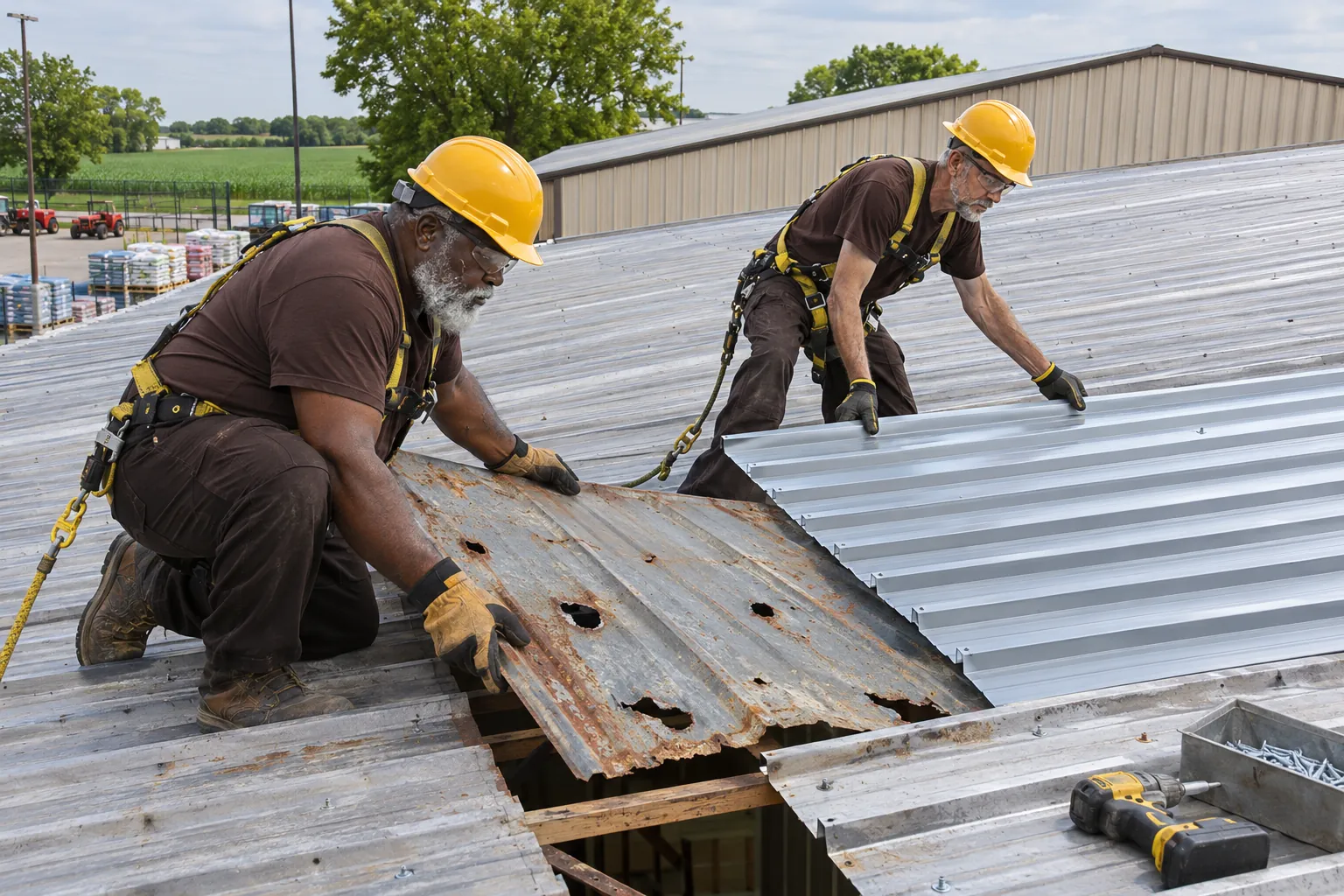
Warehouse and industrial roofs, with problem areas traced first.
Shelbyville commercial roof repair
Metal panel roofs on shops, offices, and ag buildings.
Bargersville commercial roof repair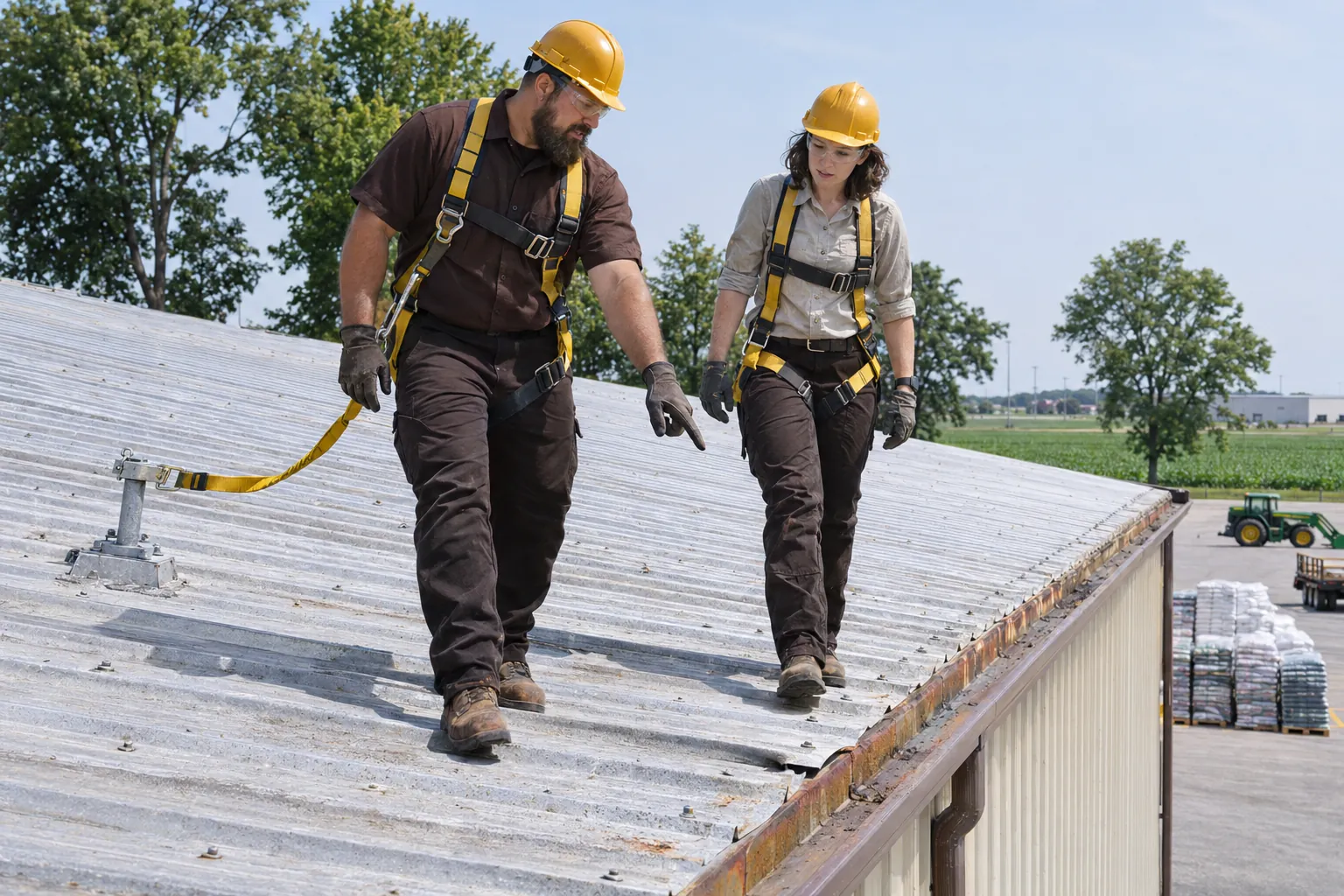
TPO and EPDM roofs on distribution and industrial buildings.
Whiteland commercial roof repairLeaks, tests, cost, and tenants.
Yes. Offices, retail buildings, and light industrial buildings make up most of the calls, and the usual sources are curbs, pipe boots, wall flashing, and clogged drains.
After the repair, the spot is water-tested where the roof allows.
Leaks come back with the next storm if the wrong opening was closed. A crew close by can return after heavy rain to confirm the stain stays dry.
How long the trace takes, the roof type, how much board got wet, and access. A single boot is quick; a leak traced through a soaked section is a bigger repair. We price after finding the source.
Tenants get notice of roof access days, louder work runs outside open hours where asked, and nothing blocks entrances or parking.
A test confirms the right opening was closed before the next storm does. It runs only on roof types and details where flooding the spot is safe.
Yes. A unit drain line spilling onto the membrane keeps water against nearby seams all summer. Routing it to a drain stops the problem.
Both. The trace starts at the leak, and the rest of the roof gets a walk on the same visit, since a second weak curb or boot tends to sit nearby on small buildings.
Call us. A returning stain means a second opening along the same path, and the trace starts again from the repaired spot outward.
Yes. Small roofs still have several curbs, boots, and edges, and a stain can come from any of them. A full walk usually takes little time and catches the next leak early.
Tell us where the stain is and when it shows up. We will trace it, repair it, and test the spot.