If Your Roof
Has One Open Lap
A single seam has lifted near a drain, and the board around it is dry.
Start WithA welded or taped seam patch
As a Greenwood flat roof repair contractor, we patch TPO, EPDM, and built-up roofs, reset leaking drains, and replace the wet board under each repair.
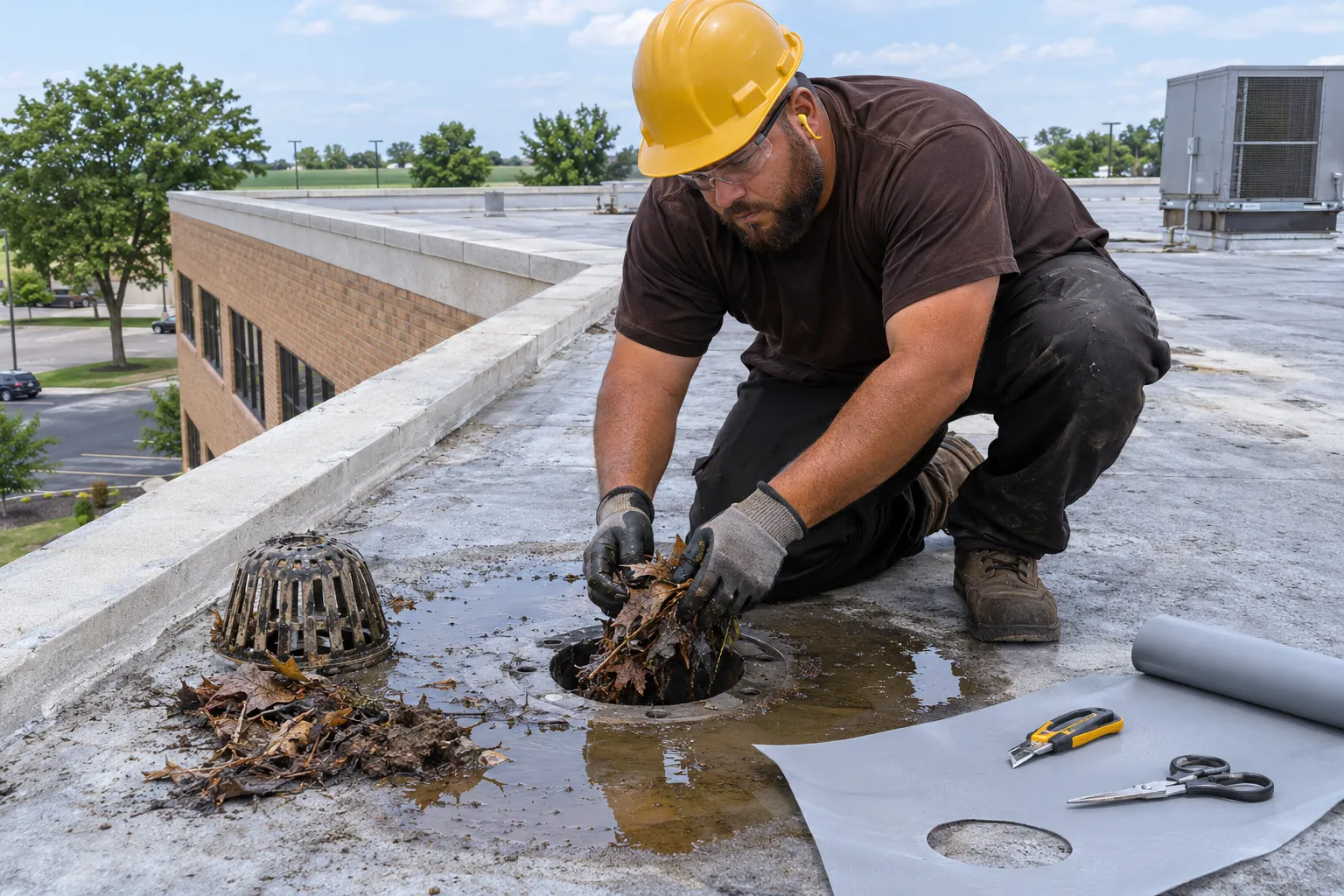
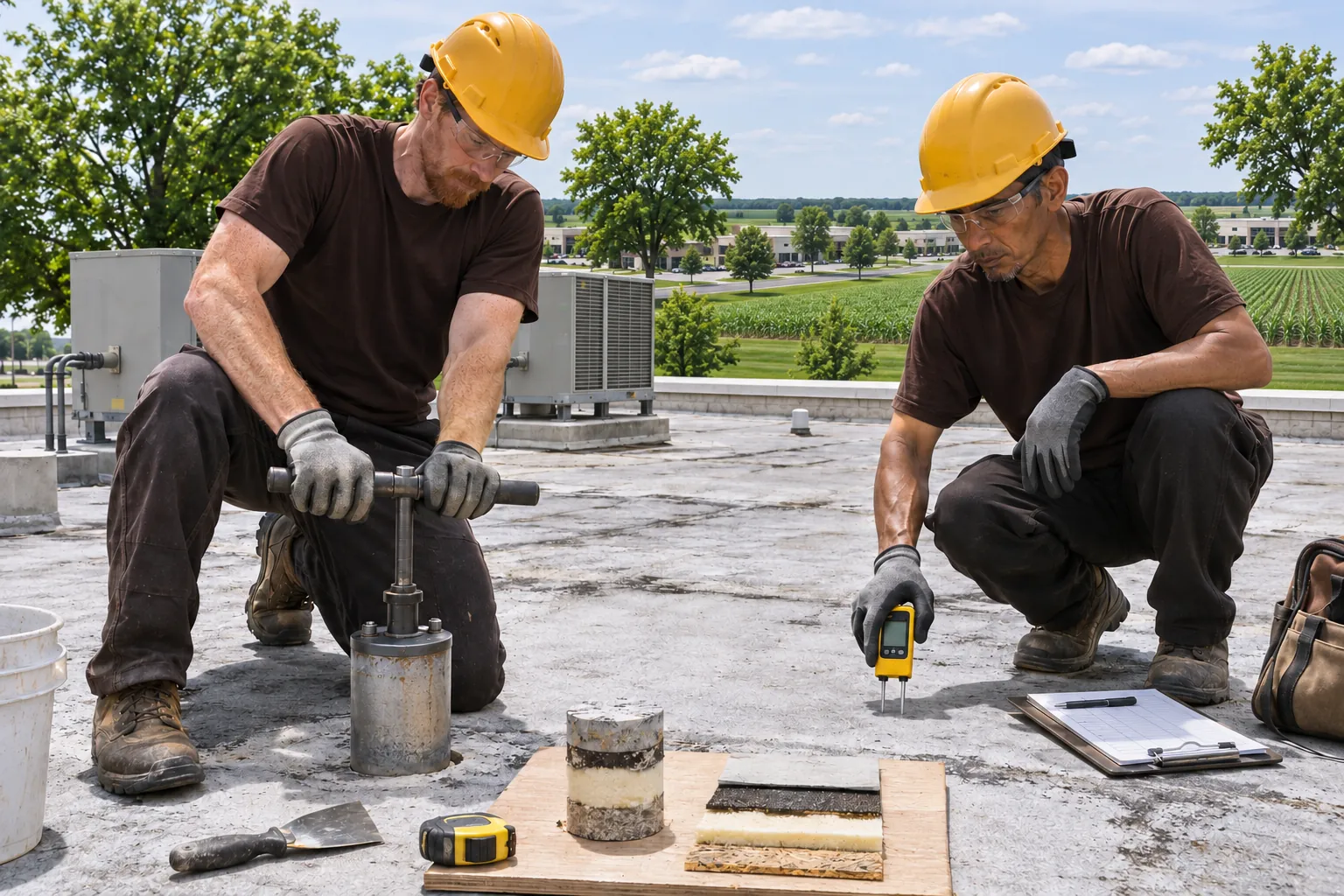
Greenwood flat roof repair fits most low-slope roofs we walk. These four situations show where a patch works and where it stops making sense.
A single seam has lifted near a drain, and the board around it is dry.
Rings of dirt mark where water sits around a drain set higher than the deck.
Bubbles sit in the field, and some are cracked along the top.
Cores come up soaked across many bays, and patches keep failing side by side.
Low-slope roofs fail in a handful of predictable places. Each card names what drives the damage.
Dark rings and silt on the membrane around a drain bowl.
The strainer is packed or the drain sits high. Water stays for days and works under the clamping ring.
A lap edge curled up enough to slide a fingernail under.
Summer heat and winter cold moved the sheet until the adhesive or weld let go at the outer edge.
Bubbles in the field that get bigger every summer.
Air or water trapped between plies expands in the heat. Cracked blisters let rain straight into the roof.
Small cuts and dropped-screw holes along the service path.
Technicians kneel, drop parts, and drag tools. Each hole lets water into the board right where people walk.
A short crack at an inside corner near a parapet.
Cold weather shrinks aging membrane, and corners take the strain first. Ice in the crack opens it wider.
Edge metal lifted at a roof corner after a windy night.
Wind got under a loose cleat. The membrane folded over the edge now pulls away with it.
Every patch matches the roof already in place. Here is what goes on each type.
Heat-welded TPO patches fuse to the existing sheet once the surface is cleaned and primed, giving a seam as strong as the original.
Cleaned, primed rubber takes seam tape and cured EPDM patches rolled down hard, with lap sealant at every exposed edge.
Cracked or growing blisters on built-up and modified roofs are cut open, dried, and sealed under new plies of compatible material.
Clamping rings are replaced, membrane is resealed to the bowl, and drains set high get tapered fill around them.
Here is the same low-slope roof before and after a repair visit.
Ponding near a drain tends to find the nearest weak lap. Book an estimate and we will clear the drain and check the seams around it.
Five steps on every low-slope repair.
Every lap is probed, drains are checked for height and debris, and blisters are counted and marked on a roof sketch.
Cores come out wherever the board feels soft, so the wet area gets measured before anything is priced.
Each finding gets a photo and a price, ordered from open leaks down to items that can wait for the next season.
Wet board comes out, new board goes in, and the patch is welded, taped, or plied in the same membrane.
Finished patches and reset drains are photographed and dated for your records.
Steel roofs, hidden leaks, and plant roofs each have their own service.
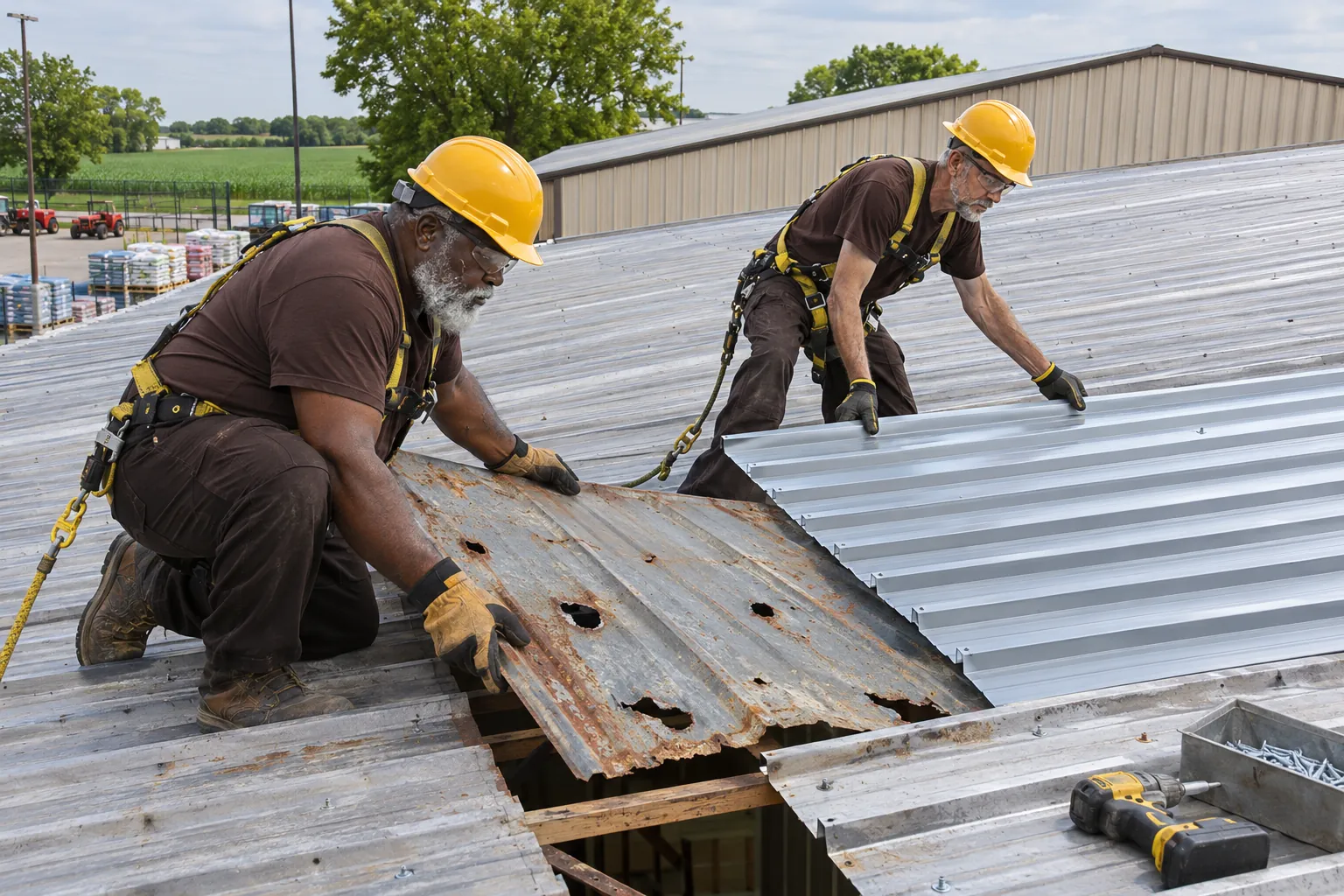
Screws, laps, trim, and rusted panels on steel roofs.
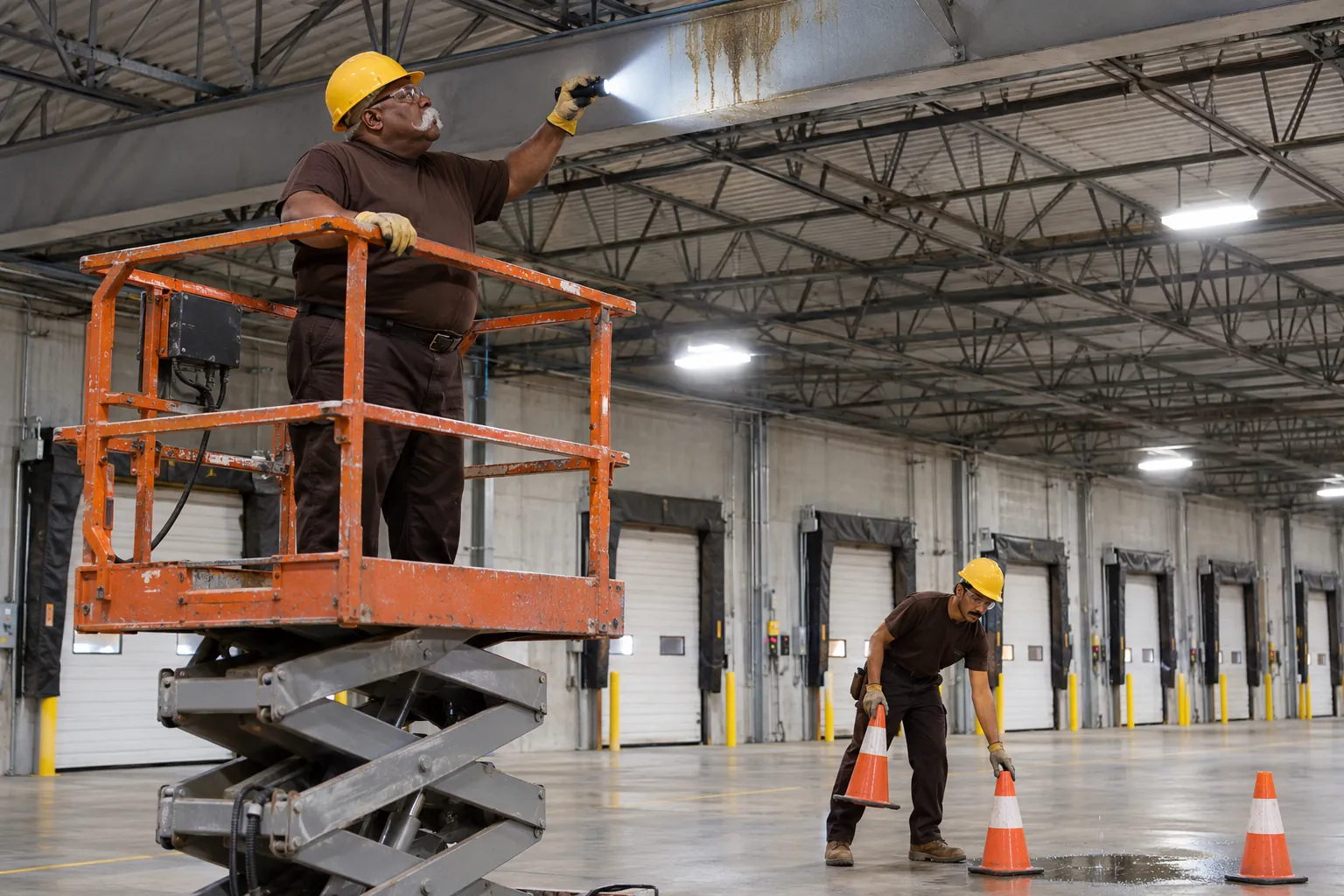
Stains traced uphill to the curb, boot, or lap.
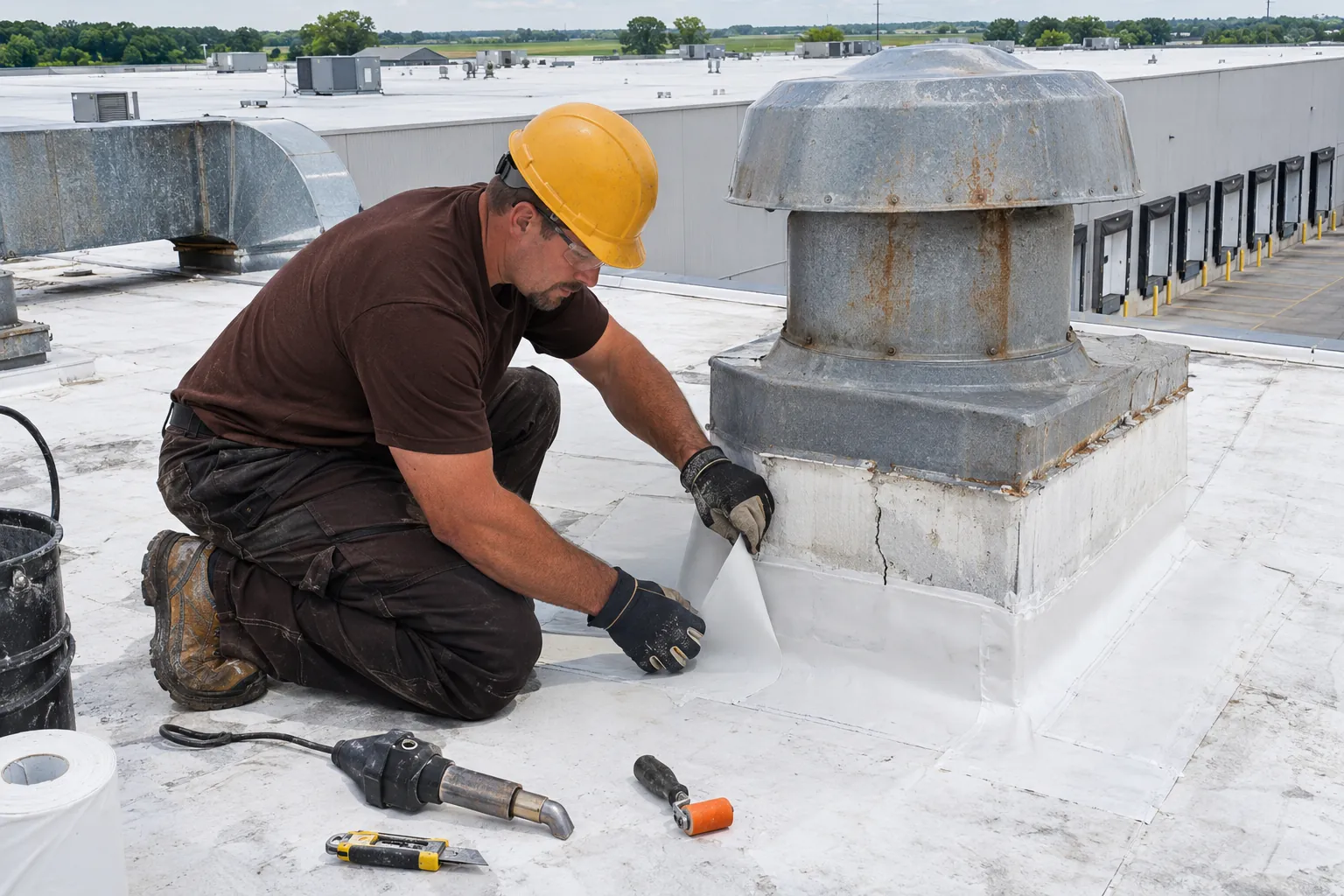
Fan curbs, exhaust areas, and roofs over production lines.
Cost, methods, drains, and blisters on low-slope roofs.
Match the membrane and fix whatever let the water in. A TPO roof gets a welded TPO patch, EPDM gets primed tape and rubber patches, and built-up roofs get compatible plies.
Before any patch goes on, wet insulation under it is cut out, and a high drain or sagging spot that held water gets corrected.
Four things drive it: the membrane type, how large the damaged area is, how much board under it is wet, and the drain or flashing work around it. A single lap patch is a short visit; a soaked section is a bigger job. The price comes after the walk.
The clamping ring comes off, old sealant and loose membrane are cleaned away, and the sheet is reset into the drain bowl with a new ring. A cracked bowl gets replaced, and a drain sitting above the deck gets tapered fill so water reaches it.
Leave small, intact blisters alone and watch them. Cracked ones, growing ones, and any blister in a walking path get cut, dried, and capped. Dozens of blisters across a roof point to wet board underneath, which calls for cores.
Clogged strainers, drains set high, a sagging deck, or board crushed by foot traffic. Two days of standing water after rain is the usual line where it needs attention.
Yes, with the right materials. Welded TPO patches go down in cold weather on a dry surface; some adhesives and sealants wait for warmer days, so a temporary seal holds until then.
Send the address and the membrane type if you know it. We will walk the roof and price each patch.