If Your Roof
Softens Around Exhaust Fans
Membrane under a fan feels gummy and stained with residue.
Start WithExhaust-rated membrane at the fan
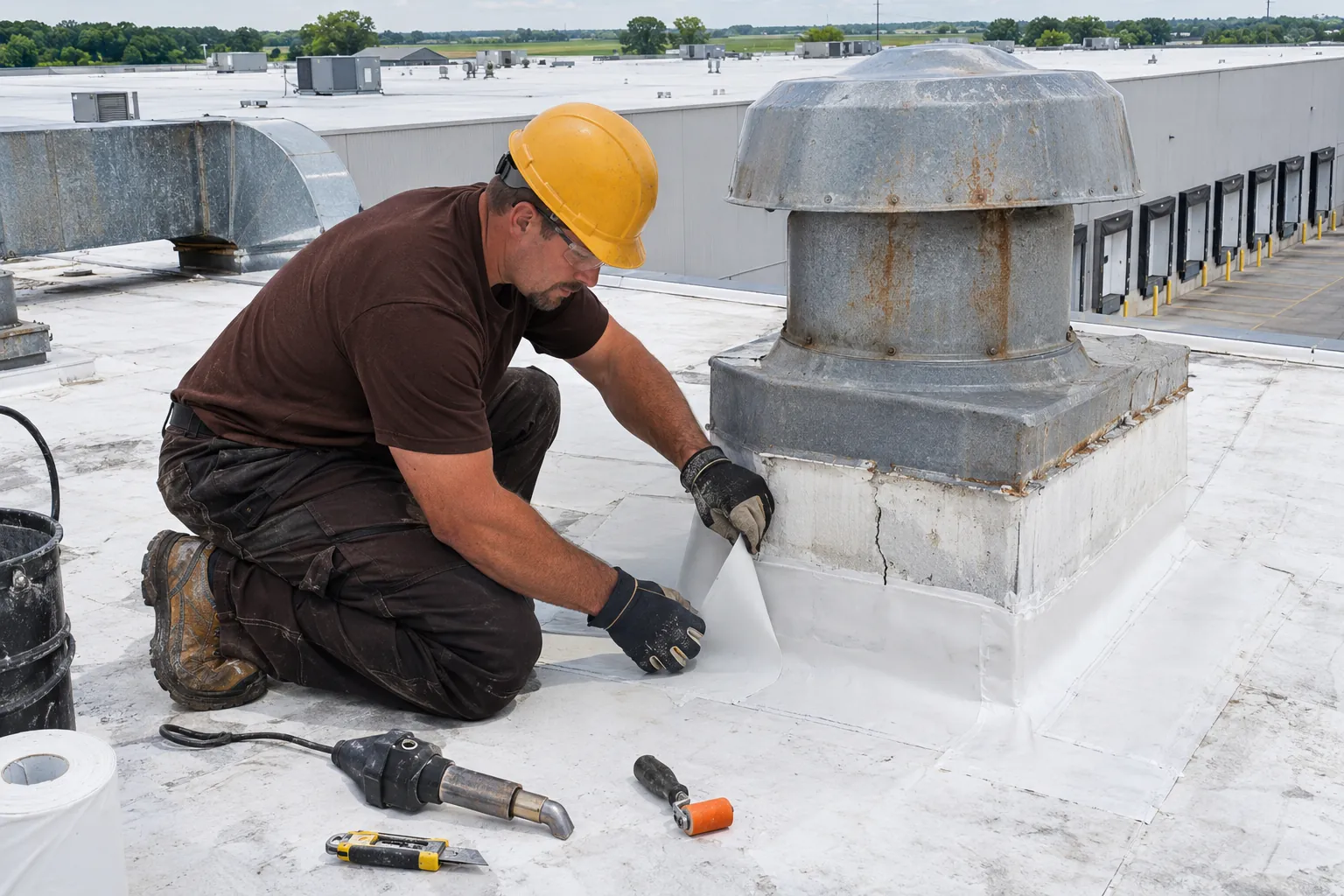
As a Greenwood industrial roof repair contractor, we repair plant roofs around fans, ducts, and curbs, working around shifts and protecting the floor below.
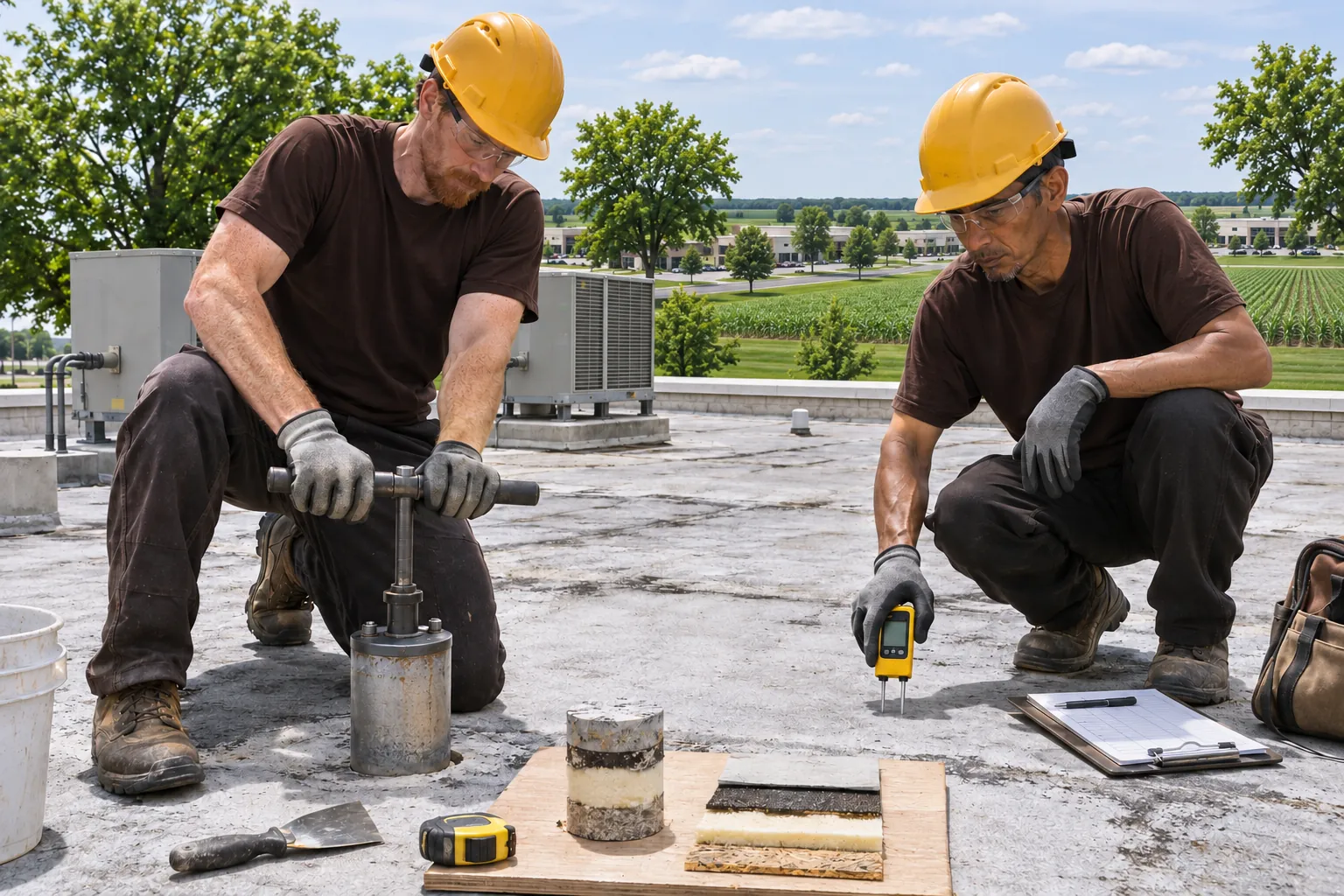
Greenwood industrial roof repair covers most plant roofs we walk. Four situations show where a repair fits and where it stops.
Membrane under a fan feels gummy and stained with residue.
Drips land on equipment during storms.
Cuts and crushed board run between ladders and units.
Cores come up soaked across the roof, and the deck shows rust from below.
Plant roofs take damage that office roofs never see. Each card names what drives it.
A gummy, stained patch of roof under an exhaust fan.
Grease and oil mist from the fan break down many membranes. The sheet softens, shrinks, and splits.
Rattling fan housings and a drip near the base of a curb.
Constant vibration works screws and flashing loose until the curb corner opens.
Dropped screws and boot scuffs between ladders and units.
Mechanical crews cross the roof weekly. Every cut and crushed spot lets water into the board.
Brittle, cracked flashing at the base of a hot exhaust stack.
Heat from the stack dries out sealant and rubber flashing, which cracks and pulls away.
Standing water in a low bay between heavy equipment.
Heavy units and old framing let the deck sag, so water collects where drains cannot reach it.
Rust flakes falling on equipment from the underside of the deck.
Water held in soaked insulation for years has started eating the steel deck itself.
Each repair is planned with plant staff before work starts.
Membrane, seams, drains, curbs, and areas around stacks are checked, with photos and a ranked repair list for plant staff.
Damaged membrane at exhaust fans is replaced with sheet rated for the exposure, plus grease containment where needed.
Work stays on the roof surface where possible, with containment set up below wherever the deck must open.
Pads along service routes spread foot traffic and protect the membrane between ladders and equipment.
Here is the same plant roof before and after a repair visit.
A temporary seal can keep production dry until a planned repair window. Book an estimate and we will set both up.
Five steps, planned with your plant staff.
Access, hot-work rules, lift use, and quiet hours are agreed with safety staff before anyone goes up.
The roof is walked zone by zone, with fan areas, stacks, curbs, and service paths photographed.
Repairs over lines are scheduled for shift changes, weekends, or shutdowns the plant chooses.
Each zone is opened, repaired in rated material, and closed within its window, with containment below where needed.
Photos of each repaired zone go to plant staff with the date and materials used.
Membrane roofs, steel roofs, and hidden leaks each have their own service.
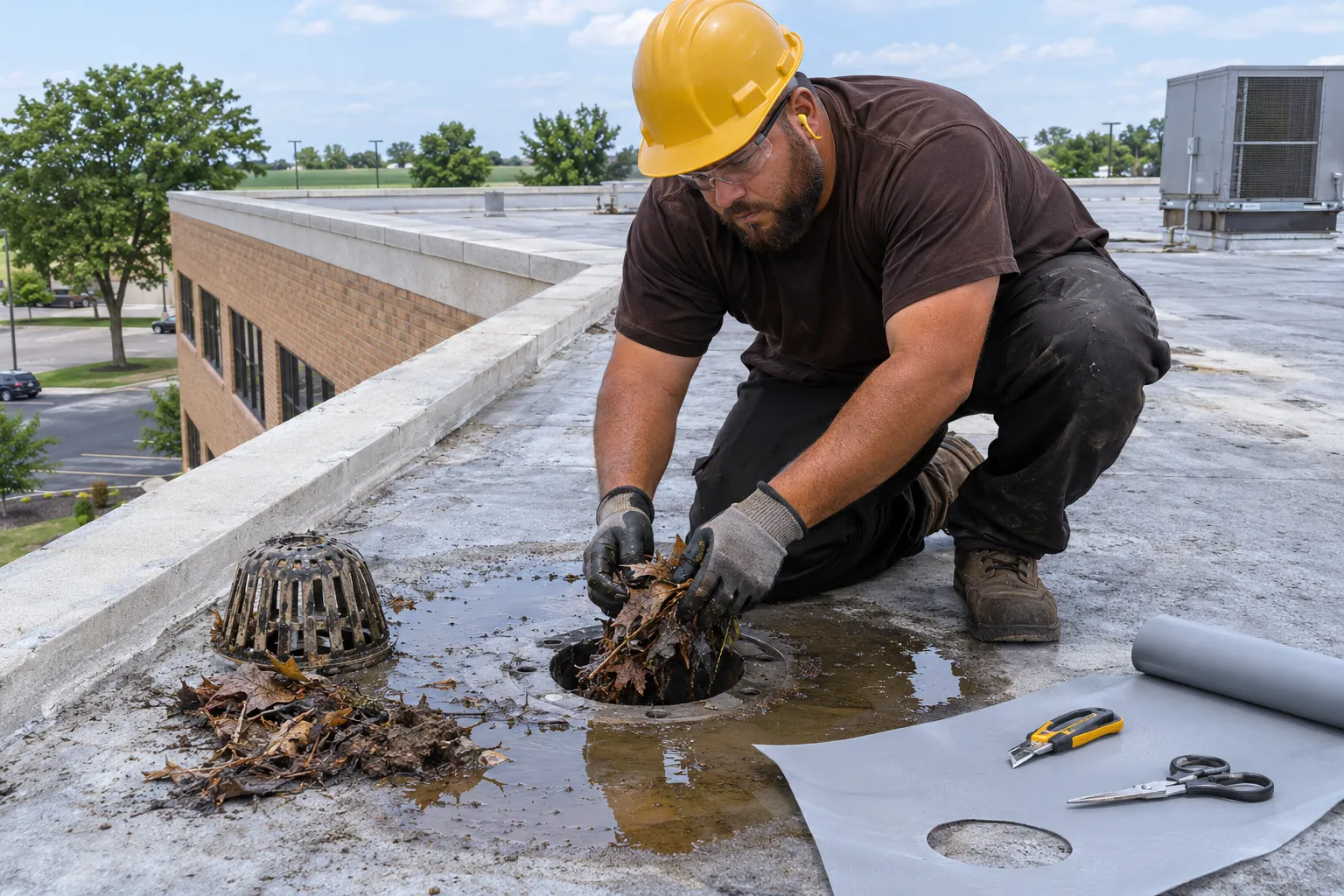
Seams, blisters, and drains on low-slope membrane roofs.
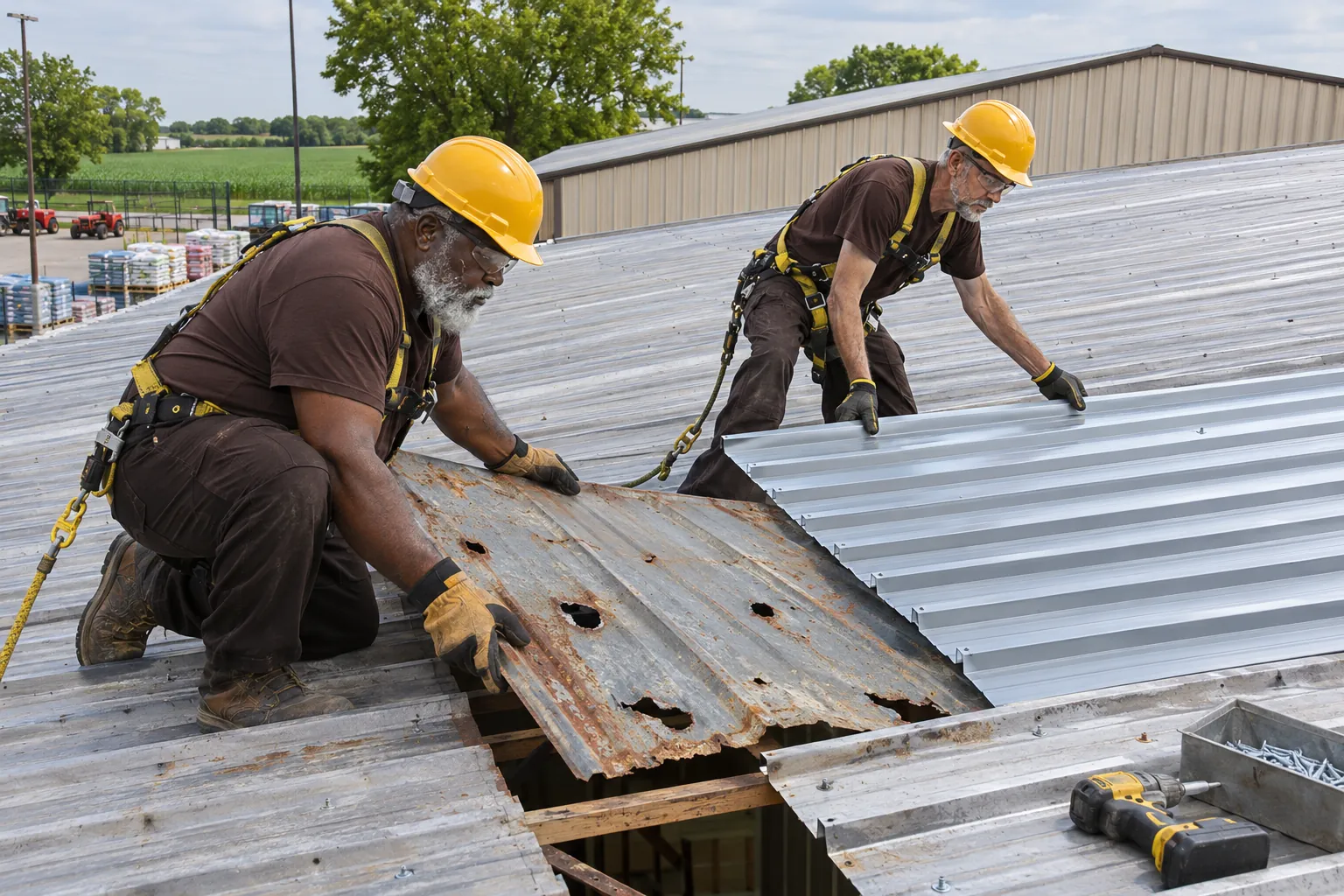
Screws, laps, trim, and rusted panels on steel roofs.
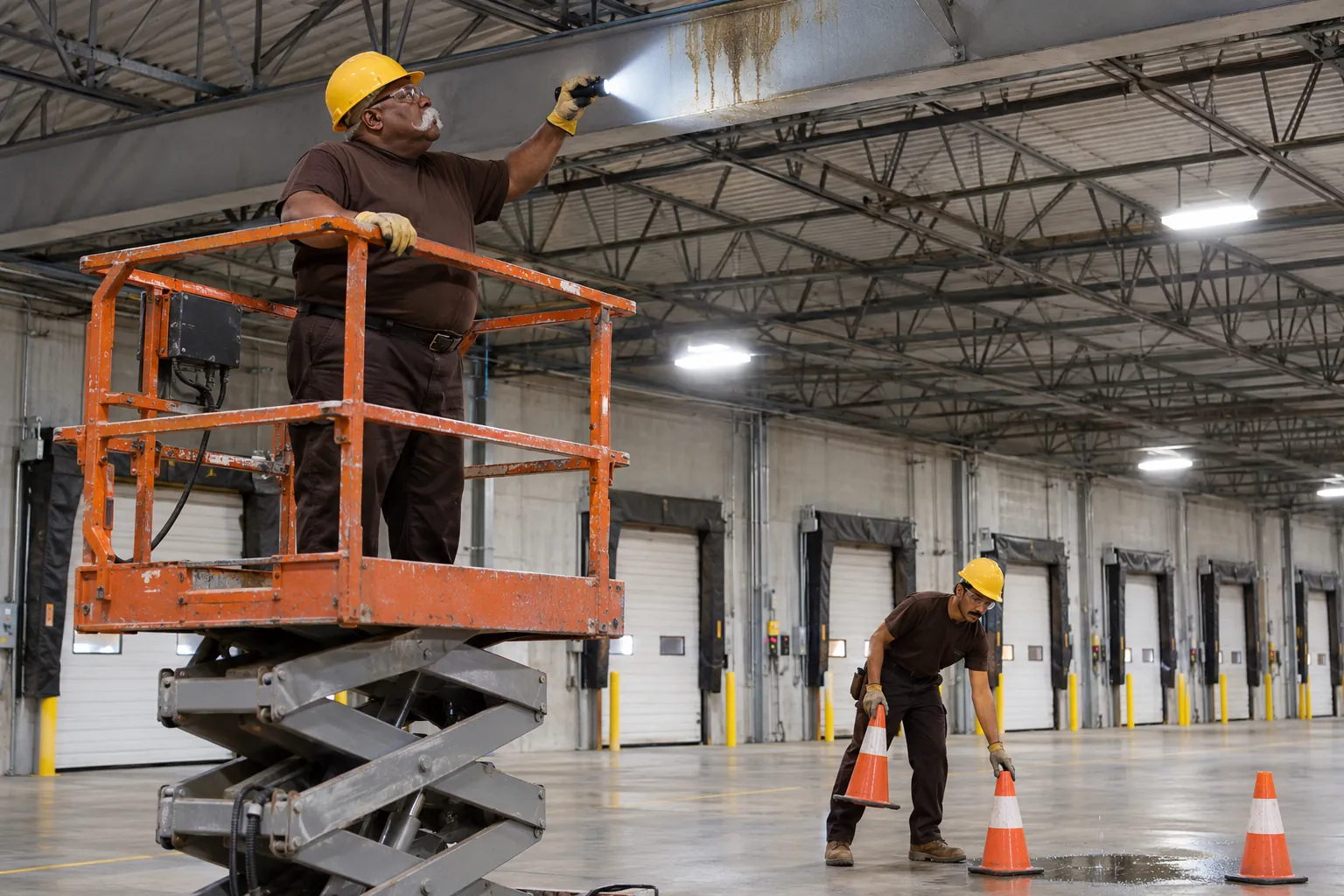
Stains traced uphill to the curb, boot, or lap.
Inspections, cost, production floors, and finding a roofer.
Membrane or panels, seams, flashing, drains, curbs, and the areas around stacks and process equipment where heat and grease attack roofing.
Damage from service traffic and structural concerns such as ponding or deflection are noted too. The plant gets photos and a ranked list.
Two plants with the same leak can need very different work. Dry board and easy access make for a short job; soaked insulation, exhaust that calls for special membrane, and weekend-only windows make for a bigger one. Each plant is priced after the walk.
Look for a roofer who works over active production floors, follows plant safety rules, and can match TPO, EPDM, built-up, or metal. Ask for a written scope with photos. We repair plant roofs across Greenwood and the towns of Johnson and Shelby counties.
Nothing is allowed to fall into the work area. Repairs happen from the roof surface where possible, containment goes up below any deck opening, and hot or noisy work runs around shifts.
Fans vent heat, grease, oil mist, or chemicals that break down many membranes, and their vibration loosens flashing. Rated membrane, grease containment, and resealed curbs fix both.
Only when plant safety staff clear it. Welding and torch work get a permit from the plant, a fire watch, and timing that keeps them clear of process hazards.
Yes. Many plants mix membrane over production with steel over storage. Steel sections get matching panels, screws, and trim, and the repair list groups items by roof type.
Send the plant address and the best contact for safety and access. We will set a walk around your shifts.